История каждого подержанного автомобиля будет максимально прозрачной. Бизнес, построенный на реставрации и последующей перепродаже разбитых в результате аварии авто, станет не актуальным.
Глава департамента автомобильного транспорта Яннис Николаидис инициировал открытые общественные консультации с предложением о внесении изменений в “Свидетельство о регистрации транспортного средства”. В частности, Я. Николаидес предложил включить в документ полную историю повреждений, ремонтных работ и замены автозапчастей данного авто. Страховая компания будет обязана сообщать регистратору транспортных средств о любом нанесенном автомобилю ущербе. “Ранее мы уже решили вопрос контроля аукционных автомобилей, ввозимых из-за рубежа, но теперь пришло время урегулировать этот вопрос и внутри страны. Поэтому, если автомобиль попал в аварию на Кипре, страховщик будет обязан сообщить об этом властям”, - сказал Николаидис.
Страховые компании будут сообщать регистратору не только об ущербе от аварий, но и от стихийных бедствий (наводнений, пожаров, града и других инцидентов).
“Предложение было открыто для общественных консультаций, и, в большинстве, реакция была положительной. Безусловно, от принятия нового закона выиграют почти все. За исключением тех, кто извлекал выгоду из-за отсутствия прозрачности в истории транспортного средства. Не секрет, что в настоящее время некоторые автодилеры восстанавливают автомобили после серьезных аварий и продают их доверчивым покупателям. Поправки, которые скоро будут внесены в законодательство, позволят исключить возможность подобного обмана”, - добавил глава департамента.

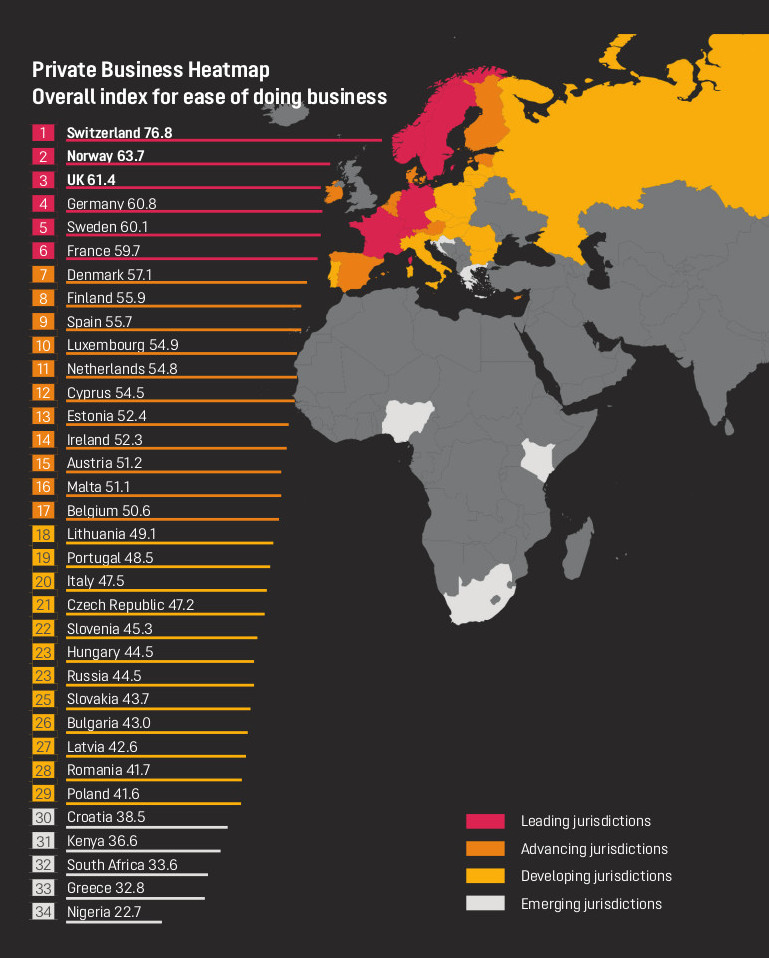
Switzerland, Norway, UK, Germany, Sweden, and France lead the rankings as best places for private businesses and entrepreneurship to flourish in PwC’s first ever EMEA Private Business Heatmap. It ranks the attractiveness of 34 EMEA countries across categories including macroeconomics, private business landscape, tax and regulatory environment, Environmental, Social, and Governance metrics, public health, education, skills and talent, and technology infrastructure.
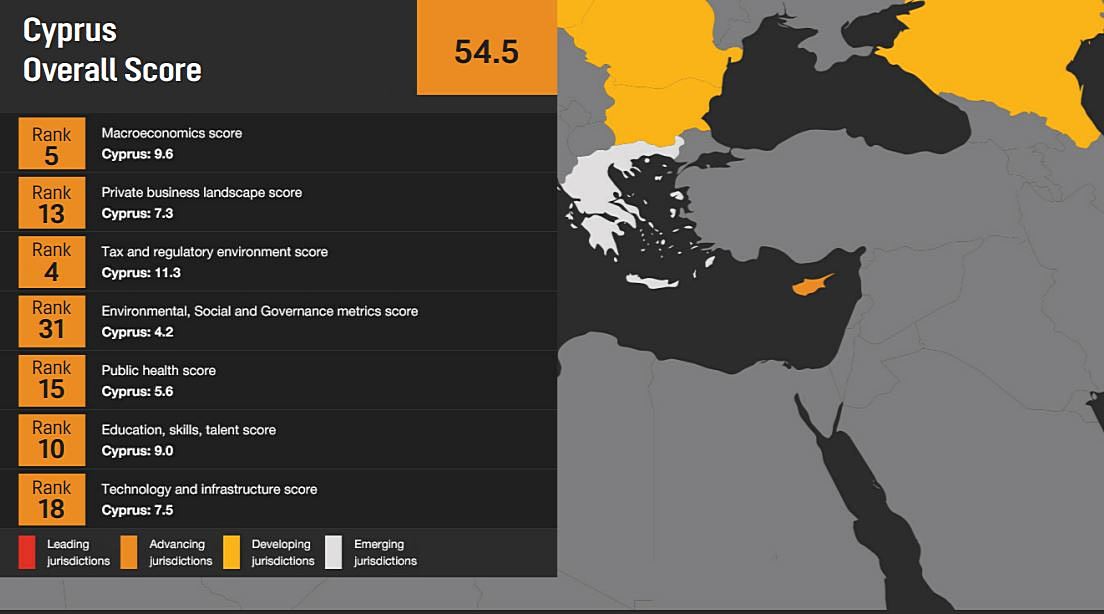
Cyprus ranks in the ‘advancing’ category, placing 12th, with an overall score of 54.5, while The Netherlands ranks 11th (54.8) and Luxembourg 10th (54.9). Cyprus achieved a high ranking in the Macroeconomics (5th) and Tax-Regulatory environment (4th) categories. At the same time, however, the Heatmap’s findings highlight a few categories in which Cyprus still has a long way to go. These fields have to do with ESG metrics (31st) and Technology Infrastructure (18th).
The key findings include:
● Five countries rank as the leading jurisdictions this year.
● A further 12 jurisdictions rank in the ‘advancing’ category with an EPB Heatmap overall score of at least 50 out of 100.
● 12 jurisdictions were identified as ‘developing’ with an EPB Heatmap score of between 40 and 50 out of 100.
● Five jurisdictions were identified as ‘emerging’ with an EPB Heatmap score of less than 40 out of 100.
● All four Nordic countries place within the top 10 jurisdictions based on overall EPB Heatmap rankings: Norway (2nd), Sweden (5th), Denmark (7th), and Finland (8th). Sweden ranks top within the ESG and Public Health categories. Norway co-leads the Education, Skills and Talent category.
● The UK also performs strongly, with a 3rd place ranking overall.

«Необходимо идти в ногу со временем!» – так анонсирует компания Q Travel свои услуги, и готова предложить своим клиентам туристические сервисы за криптовалюту.
Основатели Q Travel, Елена Космина и Софья Ефимова, делятся своим взглядом на современные тенденции.
- Какие услуги предоставляет Q Travel?
- Q Travel входит в группу компаний Quonota Investments Ltd и создана для предоставления туристического и корпоративного сервиса высокого уровня с безупречной четкостью и интеллектуальным подходом к каждому запросу клиента. Опыт и знание направлений позволяют обеспечивать быструю и качественную поддержку на всех этапах планирования путешествий – перелет, проживание, визовая и информационная поддержка по актуальным правилам въезда, связанным с COVID-19.
- Что подтолкнуло Вас на работу с криптовалютой в Вашей индустрии?
- Невозможно не заметить изменения в туристических тенденциях за последние 3 года, конечно мощным фактором является пандемия, которая фактически перевернула весь мир, в том числе туристический, с ног на голову.
Куда бы турист не решил отправиться необходимы QR-коды, электронные формы. Таким образом, цифровые технологии стали неотьемлемой частью ежедневной рутины.
Криптовалюта – это динамично растущий способ цифровой оплаты, который уже давно используется в различных индустриях. Наша компания рада предоставить возможность для наших клиентов, предлагая выбор удобных форм оплаты за услуги.
- Насколько удобно и насколько сложно оплачивать свое путешествие криптовалютой?
- Это проще простого! Вы не почувствуете никакой разницы – у вас будет классический счет, по которому вы сможете оплатить как традиционным способом, так и одной из многочисленных криптовалют, которые поддерживает наша платежная система.
- Насколько популярна оплата криптовалютой на туристическом рынке?
- Спрос на оплату туристических услуг криптовалютой безусловно растет! Ряд отдельных цепочек отелей уже принимает подобные платежи от своих клиентов, например S Hotels & Resorts (Мальдивы), The Pavilions Hotels & Resorts (Пхукет), The Chedi Andermatt (Швейцария), The Kessler Collection (CША), а также авиакомпания Air Baltic, платформа онлайн бронирований Expedia и многие другие.
Мы более чем уверены, что вскоре еще больше сервисов будет предлагаться за криптовалюту, и мы надеемся занять лидирующие позиции среди туристических компаний, поддерживающих данный тренд!
В заключение хотелось бы добавить о том, что нас вдохновляют новые возможности и шанс расширить выбор для наших клиентов, как в вопросе выбора направления для путешествий, так и в выборе способа оплаты.
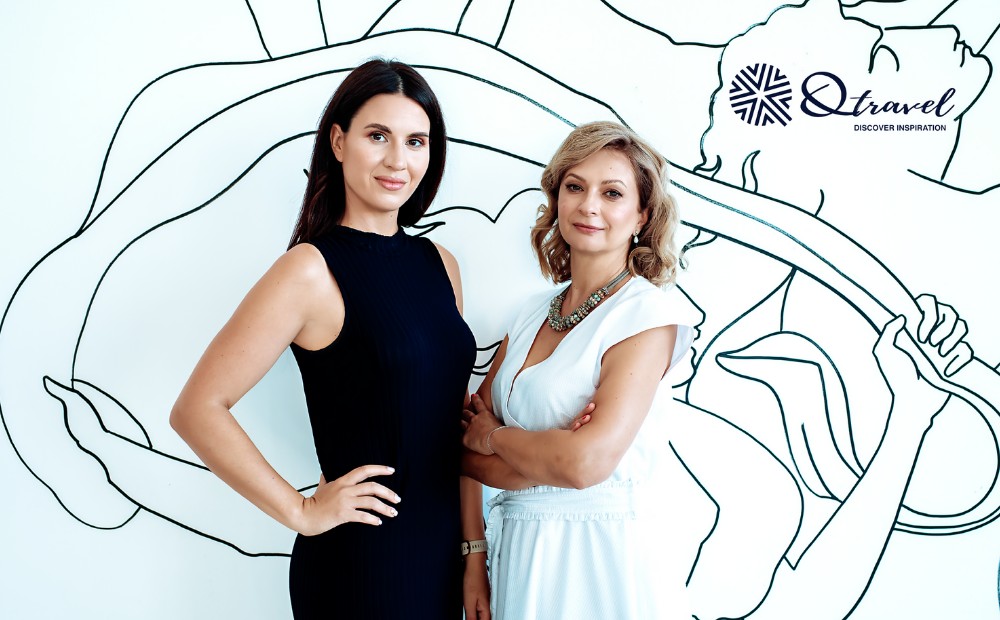
Фото предоставлены компанией Q Travel.

Сделан первый шаг на пути к энергетической безопасности Кипра. “Не за горами” отказ от тяжелого топлива, используемого сейчас для генерации энергии.
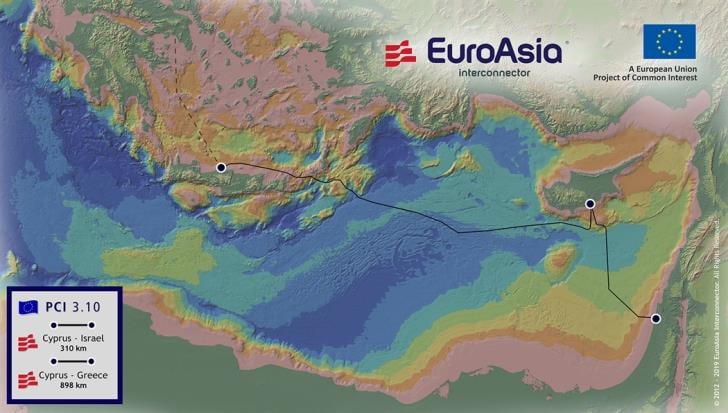
26 января 2022 г. руководство ЕС приняло решение выделить субсидию в размере 657 млн. евро на реализацию трансграничного энергетического проекта EuroAsia Interconnector, который положит конец энергетической изоляции Кипра. EuroAsia Interconnector - это кипрско-греческий проект, один из пяти трансграничных проектов с общим бюджетом в 1.37 млрд евро, одобренных в рамках программы “Объединяя Европу”.
Министр энергетики Кипра Наташа Пилидис объявила об этом в своем твиттере, отметив, что это “новости, которые принесут много бонусов Кипру”. В ближайшее время она проведет пресс-конференцию, посвященную этой теме. По словам Н. Пилидис, EuroAsia Interconnector поможет “не только преодолеть энергетическую изоляцию страны, но и обеспечить энергетическую безопасность, развивать конкуренцию на рынке электроэнергии и облегчить использование возобновляемых источников энергии”.
Решение Брюсселя было принято после тщательных проверок, и по итогам нескольких исследований, проведенных будущим подрядчиком. Однако стоит отметить, что выделенная сумма покрывает только треть всего бюджета. Подрядчик намерен взять оставшуюся сумму в кредит в Европейском инвестиционном банке или в других кредитных организациях. Ранее проект уже был включен в перечень общественно важных европейских инициатив, а на исследования его эффективности потратили около 14 млн евро. Правительство Кипра готово выделить на EuroAsia Interconnector 100 млн евро, которые оно получит в рамках “Плана восстановления и устойчивости”.
Напомним, что в настоящее время Кипр - это единственная страна Евросоюза с полностью изолированной энергосистемой. Проект осуществляется посредством закладки силового кабеля по морскому дну на глубине до 3 км. На начальном этапе электрокабель соединит Кипр с Критом. Общая протяженность всей магистрали интерконнектора EuroAsia составит около 1500 км.

Заканчивается срок подачи информации о реальных владельцах компаний. Регулятор предоставит данные о бенефициарах всем желающим и за “три копейки”.
12 марта 2022 г. заканчивается установленный правительством Кипра срок подачи информации о реальных владельцах кипрских компаний. Компаниям не предоставившим информацию о конечных бенефициарах, будут начисляться штрафы и пени уже с 16 марта 2022 г.
Напомним, что раскрытие информации о владельцах компаний является требованием европейского регулятора с целью создания “Реестра бенефициарных владельцев компаний” (UBO). Есть мнение, что требования UBO направлены, в первую очередь, на раскрытие информации о российских владельцах кипрских компаний. Тем не менее, даже сторонники UBO говорят о том, что при поиске реального владельца компании правильнее пользоваться пословицей “Дорогу не ищут, а спрашивают”. Если компании добровольно не предоставят такую информацию, то найти ее практически невозможно. Регулятору придется создавать квалифицированный штат специалистов, которые будут собирать “цепочки” из номинальных владельцев в разных низконалоговых юрисдикциях.
К сожалению, у регулятора пока нет однозначного подхода к тому, каким образом к информации о конечных бенефициарах будут допускаться сторонние организации и лица. В 2021 г. эксперт Transparency International госпожа Мартини сказала, что доступ к реестру UBO будет открыт по запросу госструктурам. “У нас не было решений в отношении раскрытия этой информации для общественности”, - добавила она. Не прошло и года (26.01.2022 г.), как на правительственном ресурсе pio.gov.cy была опубликована информация о свободном доступе к реестру UBO за символическую плату - 3.5 евро. Так где же правда? Вопрос к юристам - насколько правомерно требование регулятора в свете “Закона о персональных данных” (GDPR)?
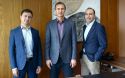
The fund industry in Cyprus has been steadily growing in recent years. However, there are still gaps in the local market in terms of the investment strategies offered to investors. Successful Business spoke to Andrey Narutskiy (AN), CEO and Executive Director, Mikhail Borisov (MB), CIO and Portfolio Manager, and Demetris Nicolaou (DN), Head of Business Development at LEON MFO Investments Limited about the situation in the market and how they plan to enhance the investment offering to wellinformed and professional investors.
As an entity established in Cyprus, how do you see LEON’s role in the local market?
AN: We started as a multifamily office in 2013 and over the years have developed strong wealth management expertise by investing ultra-high-networth individuals’ (UHNWIs) liquid assets in global capital markets. We aim to replicate the established successful investment strategies in fixed income and hedge funds in collective funds schemes. We want to do it in Cyprus to support the fund industry here and help it grow. We could have implemented our strategies in Luxembourg which is a more established fund jurisdiction.
However, we decided to launch the first funds on the island and bring our expertise to the local market.
How many funds and of what type do you have now?
Currently, we have three funds that are already closed, so we are not accepting new subscriptions from new investors. At the moment, we are launching two new funds that will be open to subscriptions. One of them provides an opportunity to invest primarily in U.S. corporate bonds. The other deals with investing in a diversified portfolio of hedge funds.
MB: The LEON Global Hedge Fund is built on our expertise accumulated in LEON for over 3 years and on my personal experience of 10 years in hedge fund strategies. We have decided to focus on private credit because we believe that in this area the most stable excess returns can be earned. This is all due to the ongoing process of banks retreating from these businesses following Basel III regulations. The fund industry has a solution and we want to capitalise on the existing opportunity.
How do the strategies of the two funds differ?
While the first one invests directly in U.S. corporate bonds, the hedge fund invests in companies that, in turn, invest in private credit. One companybuys another’s receivables at a discount and essentially earns a yield on that. It is similar to the fixed income strategy that earns a yield but very different in terms of risk drivers and sources of return. For the hedge fund, the key is managing liquidity risk and credit risk.
The focus will be on selecting the most reliable partners, checking all the processes, verifying the information, and arranging favourable terms for us and our investors.
Besides expertise, what other security guarantees could you provide to people trusting you with their financial assets?
The standard security a fund can offer is a set of regulations. We are tightly regulated both at a firm’s and at each fund’s level. We have a comprehensive infrastructure of custodians, auditors, and counterparties. In addition, with the hedge fund, most of the strategies imply that loan arrangements should be collateralised. In terms of credit risk, this approach provides a much higher level of security than investing directly in bonds.
DN: I would say that both strategies were missing from the local market. There are many investors who still keep their money in local banks getting a nextto-zero return. We provide an option for investors to explore international bond and credit markets with well-diversified products and a possibility to achieve returns well above the minimum that they get from the banks.
What would be the specific benefit for investors participating in LEON’s new funds?
DN: It is important to mention the expertise of the team managing the funds, the ease with which investors can subscribe, manage, and invest in these funds, as well as transparency, investor protection, and regulations.
MB: It is a unique product that offers investors a risk-return profile that is usually hard to access, especially in the hedge fund’s case. Normally, the minimum subscription is €1 million per fund.
Building a diversified portfolio would require €10-15 million from the investor. Our minimum threshold is much lower.
AN: We already have a distinguished track record. We have built a successful wealth management business; LEON currently manages €1 billion in individual portfolio management. This has been achieved within 8 years. Now we are launching a new line of business based on a solid platform, on the backbone of our existing business. It gives us credibility. We also have seed capital from our existing individual investors. All the funds that we are launching will have €5-10 million of seed capital.
What differentiates us from global fund players is that our fund managers are physically based in Cyprus, they can be easily reached at practically any time. Investors can always contact us and get instant updates which is another big advantage.
What size will the funds be?
Our target is to raise €100 million within 3 years for each fund, but the sky is the limit at this stage.
LEON MFO Investments Limited is regulated by the Cyprus Securities and Exchange Commission.
License No. AIFM 37/56/2013
Tel.: +357 25 268 120
www.leoninvestments.com.cy

Как укомплектовать кипрские отели рабочим персоналом к началу сезона? Чем привлекать туристов в условиях жесткой конкуренции? Эти и другие вопросы ставят перед собой чиновники из отельного бизнеса Кипра.
Глава ассоциации отелей Кипра (PACYXE) Филокипрос Русунидис выразил уверенность, что в 2022 году начнется восстановление Кипрской туристической отрасли. “Из своего общения с турагентами, администрацией аэропортов и авиакомпаниями я делаю вывод, что желание путешествовать постепенно возвращается”, - заявил он. Начинается процесс планирования нового туристического сезона, который ускорится в феврале, когда все стороны будут знать, на каких условиях в страну смогут приехать привитые и непривитые туристы. Только тогда можно будет говорить о том, насколько активно идут бронирования на летний период. “При этом на новый туристический сезон мы смотрим с оптимизмом”, - заявил г-н Русунидис. В отдыхе на Кипре заинтересованы туристы из Великобритании, России, Украины, Израиля, Польши, Германии, Венгрии, Франции, Дании, Нидерландов и Австрии. г-н Русунидис также выразил надежду, что в 2022 г. получит свое развитие тенденция к самостоятельным путешествиям среди людей с высоким уровнем доходов.
Один из руководителей PACYXE Фанос Михаилидис считает, что главным вызовом для отрасли остается нехватка рабочего персонала в гостиничной сфере и в секторе общепита. Это может стать самой серьезной проблемой для туристической индустрии, которая должна поддерживать свою конкурентоспособность. Нехватка персонала отражается на количестве бронирований. Существует реальный риск, что все, чего удалось достичь за время пандемии, будет потеряно, потому что конкуренция между странами будет достаточно высокой. “Крупные туристические агентства, которые берут на себя юридические обязательства перед туристами, настойчиво просят нас подтвердить, что отели смогут предоставить все обещанные услуги. В условиях нехватки персонала сделать это крайне трудно”, - сказал Михаилидис.
Руководитель ларнакского отделения PACYXE Иоанна Флорентиаду назвала положительным тот факт, что в зимние месяцы продолжаются авиарейсы на Кипр. Она выразила надежду, что в Ларнаку будут приезжать состоятельные туристы, которые выбирают самостоятельные путешествия.
Генеральный директор ассоциации туристических компаний Кипра Хрисемили Псилогени заявила, что бронирование мест в отелях британскими туристами в январе 2022 г. уже на 50% выше, чем в январе 2019 года. “Если ситуация с пандемией будет развиваться благоприятно, то туристический сезон 2022 года станет началом восстановления туризма”, - считает она.
По материалам stockwatch.com.cy

Мировая инфляционная спираль способствует росту цен на потребительские товары, в том числе, на стройматериалы. Вслед за стройматериалами подорожает кипрская недвижимость.
По данным Кипрской статистической службы в декабре 2021 г., в сравнении с аналогичным периодом 2020 г., цены на строительные материалы выросли на 17,1%. Этот фактор усилил давление на сектор недвижимости. Производство металлических изделий в декабре 2021 г., в сравнении с декабрем 2020 г. увеличилось на 30.17%. Также, в декабре 2021 г, в сравнении с декабрем 2020 г., увеличилась стоимость изделий из дерева, изоляционных материалов, химикатов и пластмасс +19,04%, электромеханических изделий +13,02%, минеральных продуктов +5,41%, конструкций из стали +46,56%, строительного железа +44,34%, медных труб +32,78%, стальных труб +32,69%, двутавровых стальных балок +30,28%, арматурных сеток +27.06%, битумного асфальта +26,54%, проводов и кабелей +24,64%, необработанных пиломатериалов +22,71%.
Перебои с поставками стройматериалов из Китая и рост цен на них продолжатся в последующие два месяца. Причина во временной остановке деятельности 64 заводов на севере Китая. Заводы закрылись ради улучшения качества воздуха в преддверии Олимпийских игр в Пекине в феврале 2022 г.
Кроме этого, продолжаются задержки товаров в морских портах. Проблемы с логистикой продлятся, как минимум, до третьего квартала 2022 года из-за карантина в Китае. Семь из десяти крупнейших контейнерных портов Китая закроются в связи с положительными тестами на COVID-19 у сотрудников портов. Напомним, что Китай придерживается политики "нулевого COVID”, которая предусматривает строгую блокировку сотрудников и немедленное всеобщее тестирование на любом предприятии при положительном тесте.
Один из руководителей компании Ocean Shipping Consultants Джейсон Чианг сообщил, что мировая судоходная отрасль, скорее всего, будет ощущать последствия пандемии еще долго. В частности он сказал, что “мы не ожидаем увидеть никаких новых мощностей по транспортировке грузов раньше, чем через два года. Наши возможности зависят от того, как будет развиваться пандемия”.

The European Union has taken steps to facilitate the cross-border distribution of funds (both undertakings for collective investments ‘UCITS’ and alternative investment funds ‘AIFs’) by introducing the Cross-Border Distribution of Funds package of measures (the ‘CBDF legislation’).
The CBDF legislation includes a Directive (EU) 2019/1160 amending both the UCITS Directive and AIFMD and a directly effective Regulation 2019/1156 supplemented by ESMA guidelines on marketing communications for UCITS and AIFs published on 27 May 2021.
The Directive was implemented in Cyprus with the publication on 18 October 2021 in the official gazette of amending legislations 135(I)/2021 and 134(I)/2021 to the Alternative Investment Fund Managers Law as well the Open-Ended Undertakings for Collective Investment (UCI) Law respectively.
The new rules increase the harmonisation on the marketing of AIFs and UCITS, reduce regulatory barriers, improve cost efficiencies, and enhance investor protection.
SUMMARY OF KEY POINTS
The Directive introduces rules regarding:
● ‘pre-marketing’ of AIFs
● local facilities for UCITS and AIFs sold to retail investors
● alignment of procedures and conditions for the de-notification of UCITS and AIF funds in a host Member State
● alignment of certain notifications in respect to marketing an EU AIF or UCITS in a host Member State.
THE REGULATION CONTAINS RULES ON:
● requirements around marketing communications
● verification of marketing communications by regulators
● creation of central databases for the publication of national marketing requirements
● fees and charges
● list of AIFs, UCITS, and their managers.
NEXT STEPS
Fund managers that undertake marketing activities for UCITS or AIFs in the EU, or that engage distributors to market UCITS or AIFs in the EU will need to consider whether the new framework requires them to make any changes to their existing cross-border distribution arrangements and/or marketing materials.
Source: KPMG

 The concept of а ’family office’ is not new. For a long time, all over the world large family capital and the affairs of wealthy families have been managed by professionals. But recently, multi-family offices have started to appear in Cyprus more often. These family offices serve the interests of several families at once. Is this an advantage or a disadvantage? Does Cyprus meet the requirements of the modern world in this area, and is it competitive in comparison with other countries? Successful Business speaks with the founder and CEO of Fiduciana Trust (Cyprus) Limited, Anna Homenko, about why choosing the island to establish a family office is growing in popularity and how this industry is changing.
The concept of a family office exists all over the world. Yet, until recently, it was not very popular in Cyprus. What changed? How is it developing on the island?
Previously, only people with a capital of over 20-50 million had the opportunity to create family offices. Now, those with 2-5 million can either open a family office on their own or join an existing multi-family office. The reason for this is that our reality is changing rapidly. Many hi-tech entrepreneurs are making fortunes at a relatively young age. They understand that it is necessary to manage assets from the very beginning, increase or at least preserve and correctly reinvest income. The family office entrance ticket has become cheaper and more popular. In addition, many families choose to do business with the same family offices. They already have a ‘caste’, and they feel comfortable among people who have the same income and tasks. Some even write a family constitution.
What is that? Please tell us more about it.
The family constitution defines how the family business should be run. In other words, who deals with what issues; who, when, and how uses the assets; how these assets are allocated. In essence, the family constitution is a system that governs family relationships and controls family assets. Today all this has become fashionable and in demand. Family offices are now prestigious. Several family offices can combine their assets and jointly invest in large projects.
How do they determine with whom to unite?
With the help of consultants. The cost of maintaining a family office is usually 1% of the assets. This is not a lot of money for the amount of work that the office does. After all, the family office serves as a system for coordinating all processes, a communication system between all centres of the client's life. Modern family offices have a family health manager who ensures that all family members go to the best doctors, undergo regular check-ups, and access the best medical schools. Some specialists work in the field of investment or acquisition of art objects, investments in precious metals, and stones. A new niche has appeared. Young oligarchs think differently. They form a so-called matrix of powers and are ready to delegate certain tasks to managers. By the way, recently there has been a tendency to move from the south of France to Cyprus precisely to register your family office here – not only for doing business but also for more or less permanent residence of the family members on the island.
Why do these people move to Cyprus?
They don't take root in France. In Cyprus, people are more hospitable, ready to accept foreigners into their social circle. Moreover, it's easier to organise life here. In the south of France, family offices form teams of cooks, cleaners, service personnel who are brought in from abroad since it is very difficult to find decent and loyal local personnel. The problems in the field of labour legislation should also be noted. After working for several months, employees often sue the employer, trying to get compensation. In Cyprus, the problem of forming a team is solved by recruiting personnel from the CIS countries. These people easily take root in Cyprus and value their place of work.
What are the parameters for establishing a family office in Cyprus?
As a rule, people prefer to set up family offices away from the country where they do business. Asian clients mainly choose Singapore for establishing a family office, while many Europeans prefer Switzerland and Cyprus. When deciding on a location, attention is paid to many parameters. One of them is the family lifestyle. It is necessary to consider where all family members live, work, study, travel. Cyprus – as always – turns out to be a convenient point, a crossroads for those families whose vital interests are focused on the European continent. If the family is in America, for example, then creating a family office in Cyprus may not make sense.
Another parameter is office administration. The country selection phase evaluates the structures, resources, personnel, and processes that will enable the family office to operate most efficiently. And, of course, the financial component is very important: the types and location of the family's financial assets, how much it will cost to maintain an office, apply for visas, etc.
Cyprus is one of the fastest-growing economies in the EU. Many professionals in the corporate and legal sector understand the Russian mentality. From a financial point of view, Cyprus is also convenient: it is not as expensive here as, for example, in Switzerland. It has a favourable tax climate and a developed Russian-speaking community. All these factors contribute to the opening of family offices in Cyprus.
What is your opinion on the latest changes in the legislation? What is changing for the better in Cyprus?
In Cyprus, they realised that it was necessary to welcome a business that would bring profit to the economy. Look at the metamorphosis that happened to Limassol, after a lot of businesspeople moved here, working and spending money here, creating jobs for others. This has become a big advantage. The government has responded relatively effectively to the coronavirus situation. Now many companies have transferred their personnel to remote work. This means that it is possible to attract those not tied to a specific place of residence to the island. The business motivation system for moving to Cyprus remains attractive. Let's hope that all new and coordinated changes to the legislation will be implemented quickly. What is being done now will be based on the best practices of European countries. It will lead to further growth of the Cyprus economy and make the business climate even more favourable.
ANNA HOMENKO
Founder and CEO of Fiduciana Trust
(Cyprus) Limited, Leisure Life
Property Management
Этот адрес электронной почты защищён от спам-ботов. У вас должен быть включен JavaScript для просмотра.
Graduated from the Institute of International Relations at the Taras Shevchenko National University of Kyiv, Faculty of International Law, and Keele University (UK), Faculty of Law and International Politics. Completed a Legal Practice Course (LPC) in Chester (UK).