


Continuing my story about Arctic wildlife, I want to tell you about those who live beneath the water’s surface – walruses, seals, narwhals, and whales. I will also talk about foxes and geese, which, as it turns out, are extremely important in the Arctic ecosystem. And I learned something striking – when the ice disappears, ringed seals will die out, and polar bears will decline even faster. I will explain why.
Walruses, Seals, Narwhals, and Whales: The Unseen Heroes of the Arctic Ocean
The Arctic is not only glaciers and rocky shores – it is also the vast expanse of the Arctic Ocean and surrounding seas. Here live marine animals that are hard to see in all their beauty. They may briefly appear at the surface, only to vanish again into the depths.
Take narwhals, for example – known as the “unicorns of the Arctic” for their long, spiral tusk. What makes them unique is that the tusk is not a weapon, but a sensor. It can detect the slightest changes in water temperature, pressure, and salinity. In essence, narwhals are nature’s own hydrological instruments.
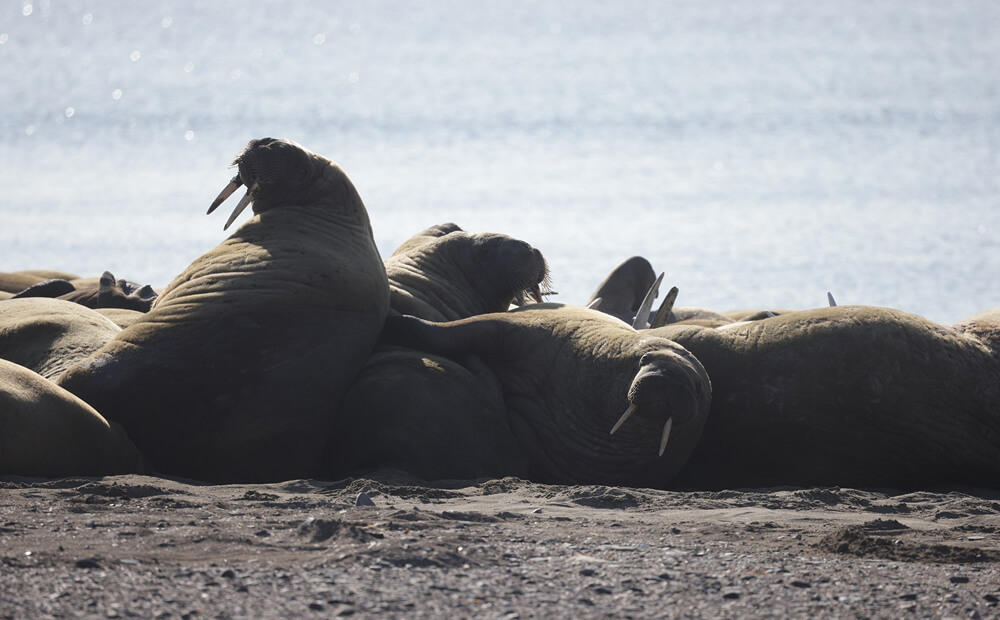
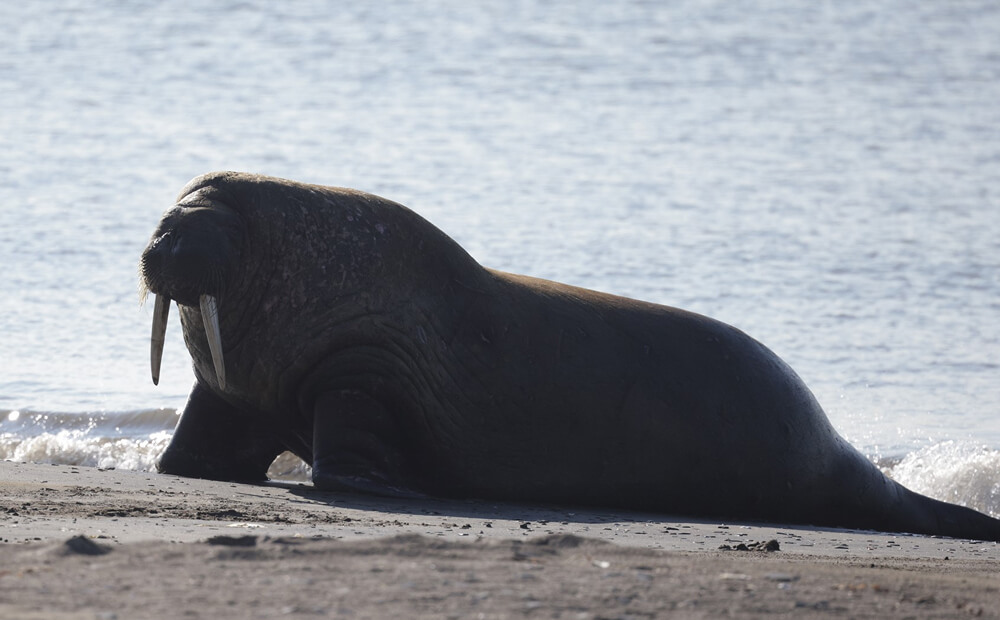
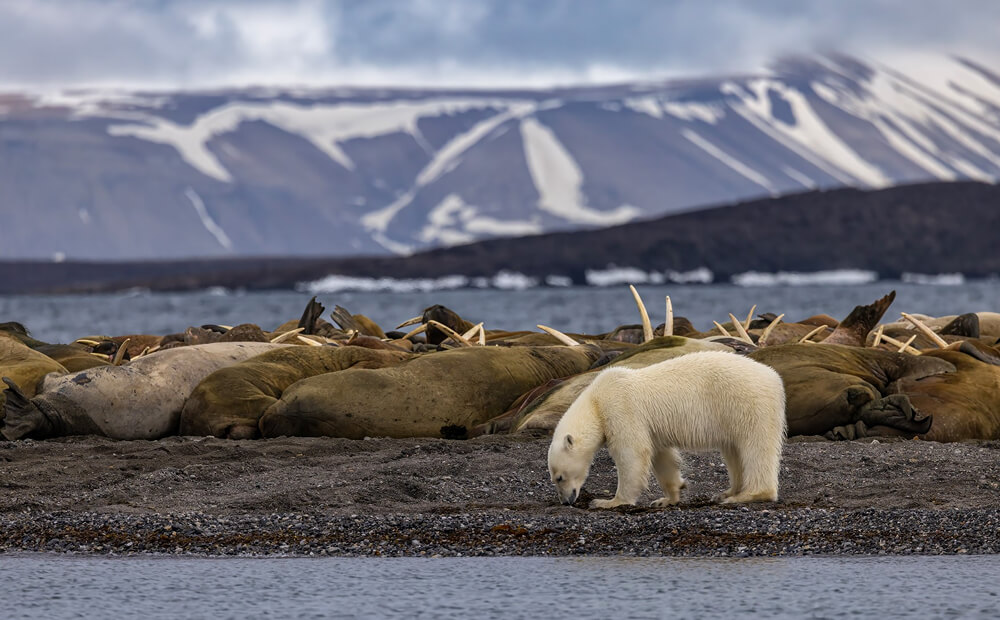
We saw many walruses. These massive animals may seem clumsy on land, but they are surprisingly graceful underwater. Their whiskers are sensitive sensors, helping them locate molluscs on the seabed. The sounds they produce are far from random noise – they are a means of communication in fog, under water, during courtship, or when threatened.
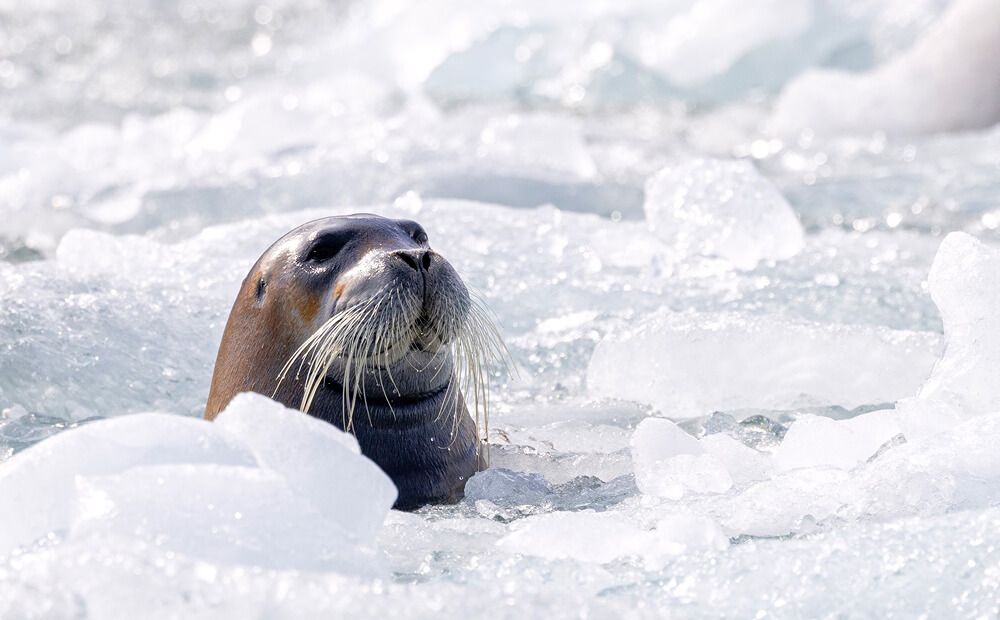
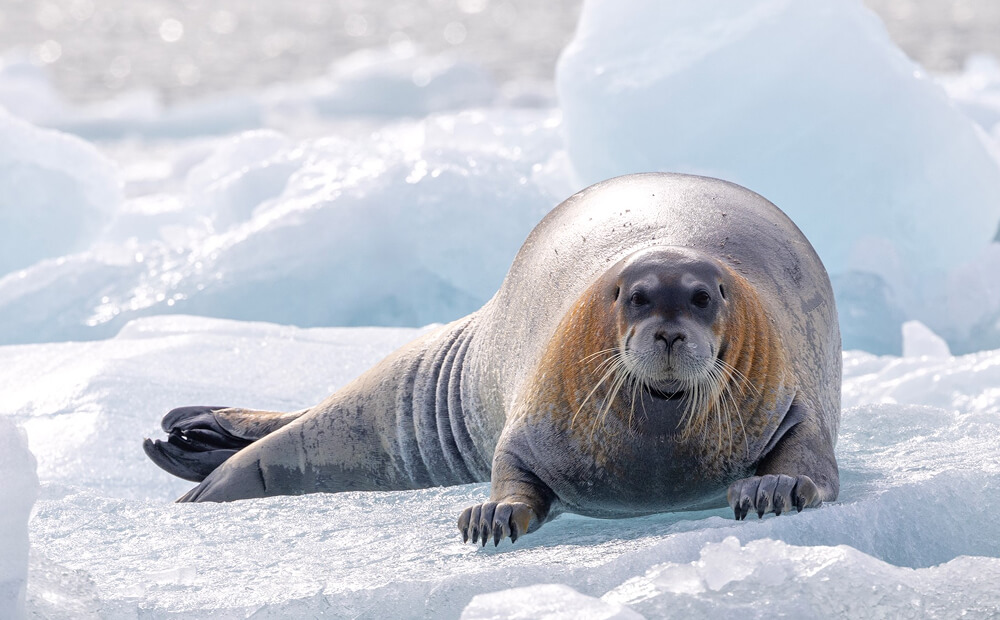
Arctic seals spend the winter under the ice, keeping breathing holes open so they can surface from time to time. They maintain these openings all winter, carefully scraping them with their claws to avoid suffocating. If a hole freezes over, the animal dies. From spring to autumn, they often haul themselves out entirely onto ice floes to bask in the sun. We once saw a polar bear hunting a seal: it caught the scent, slowly moved off to find its prey, lay down on the ice by a hole in the surface, watching, listening, and waiting.
Whales are the barometers of the climate. They are becoming increasingly rare in the latitudes frequented by sea vessels. Bowhead whales, belugas, and orcas all respond to changes in water temperature and ice cover. I interviewed zoologist Liya Pokrovskaya, who explained how a whale’s tail can identify an individual: tails are like fingerprints – unique. That is why Liya and other scientists photograph every whale they encounter, upload the images to the Happy Whale database, and in this way create a research log tracking the movements of each animal.
I too saw tail flukes and water spouts above the surface, but I couldn’t get a clear view – though I would have loved to. Whales truly are extraordinary creatures.
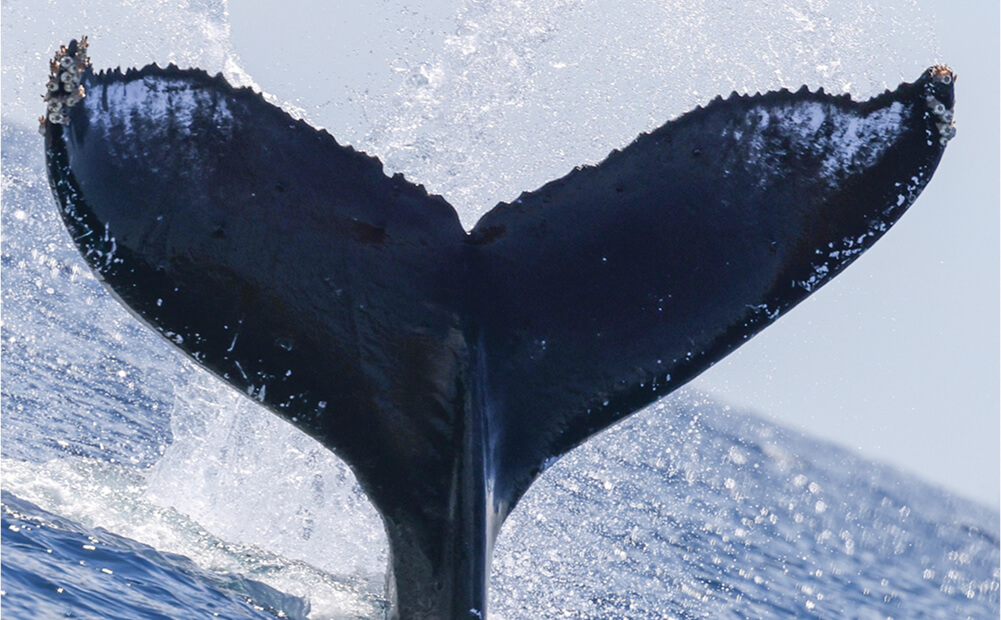
Photo: happywhale.com
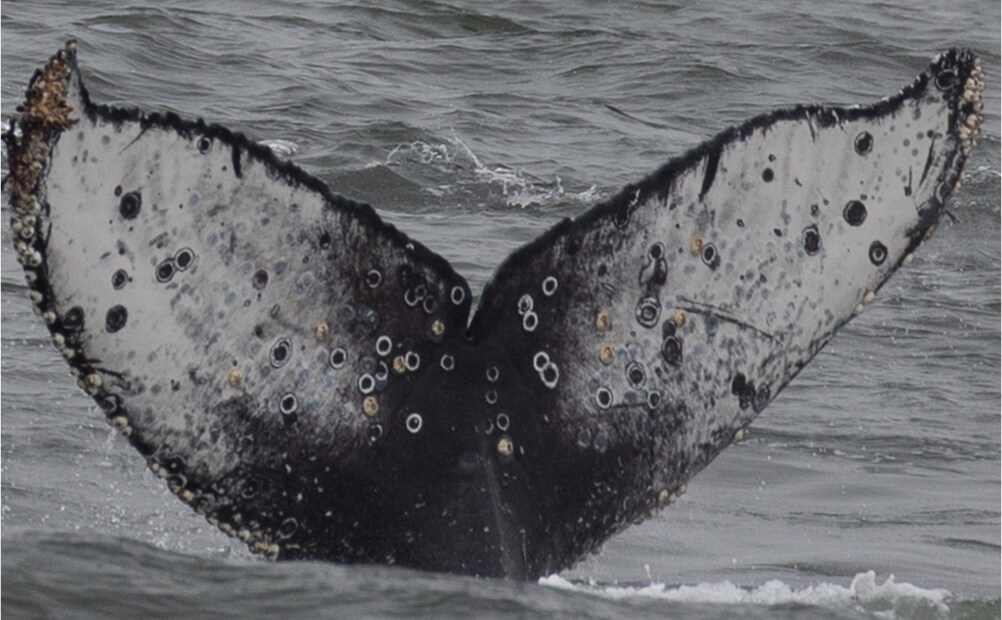
Photo: happywhale.com
Foxes and Geese – Vital Links in the Arctic Ecosystem
At first glance, the roles of foxes and geese in the ecosystem might seem secondary, but in reality, without them, the Arctic would not be the same. The Arctic fox is a scavenger, a hunter, and an opportunist, while geese are an important element of the food chain.
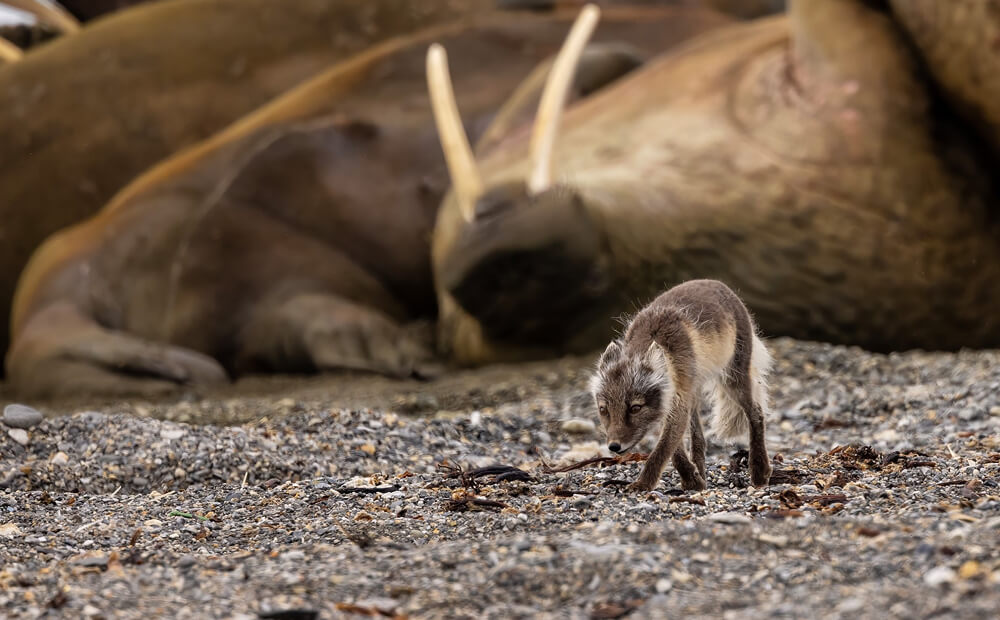
The fox regularly appears near bird colonies, looking for the right moment to snatch an egg or chick. It can be a dramatic sight – especially when gulls swoop at it, screaming to drive it away. We observed such a scene in the research settlement of Ny-Ålesund. In the photo I took, the birds are visible but the fox is hidden. Expedition leader Rayanm Elzein was luckier – he managed to capture a fox stealing an egg from a nest and watched as it hid its prize among the stones and moss before heading off to hunt again.
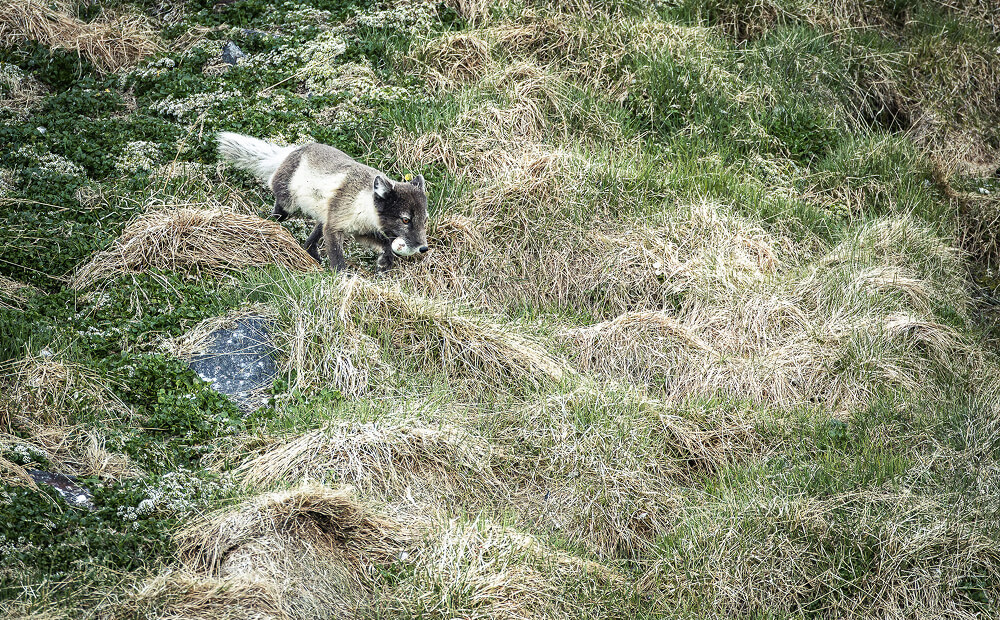
The fox is not just a hunter – it regulates bird colony numbers, catches the weak, eats the dead, and cleans up any leftover food.
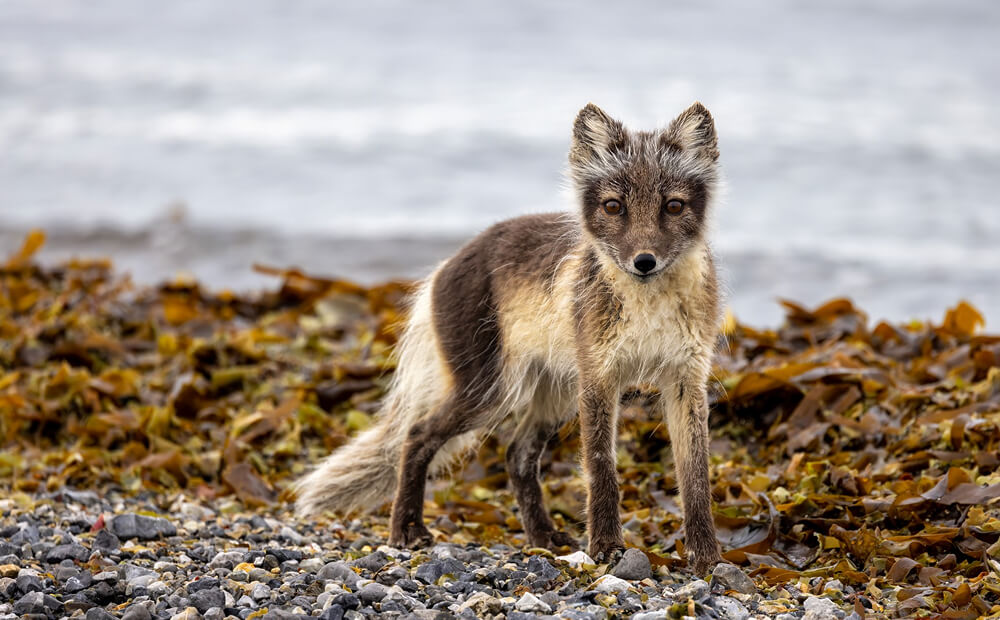
Interestingly, foxes have seasonal dens: in spring, they prefer areas close to bird colonies, while in autumn they move towards the coast, where they can find washed-up fish and seals. We were also told that foxes are displacing the Arctic fox. This northern animal is well adapted to the extreme cold of the Arctic but is not good at competing. In the past, they had no such rivals. Red foxes are now moving further north – they are craftier and more intelligent, taking over Arctic fox dens, stealing their food, and even eating their young. As a result, Arctic foxes are gradually dying out. In some regions of Norway, red foxes are now deliberately culled to give the Arctic fox a chance of survival.
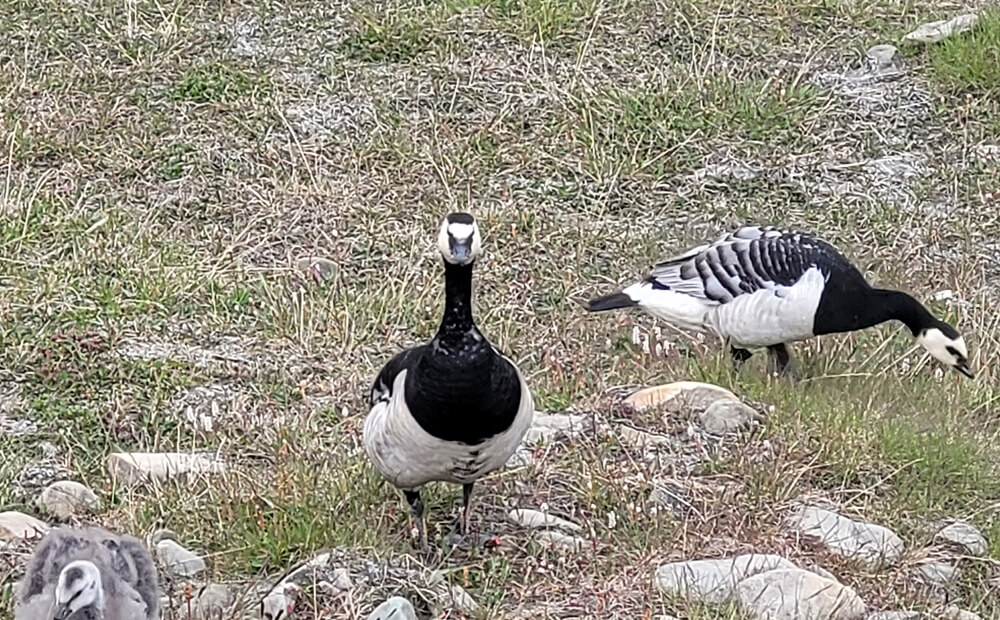
Geese are a seasonal food source for polar bears. In summer, when the ice is almost gone and hunting seals is impossible, goose colonies become a vital food supply for the bears. In the past, polar bears did not eat on land in summer, spending their time entirely on the ice. Now they are forced to feed on eggs and chicks. This is not their natural diet, but hunger dictates new strategies.
In Longyearbyen, the capital of the Svalbard archipelago, we saw geese strolling calmly through the streets – almost like pigeons in European cities. But outside the town, in the open tundra, they become part of the food chain.
Geese also play another important role – they fertilise the tundra. Their droppings are rich in nitrogen and phosphorus, which stimulate the growth of mosses, grasses, and dwarf plants. Where geese spend the summer, the tundra looks greener than in neighbouring areas.
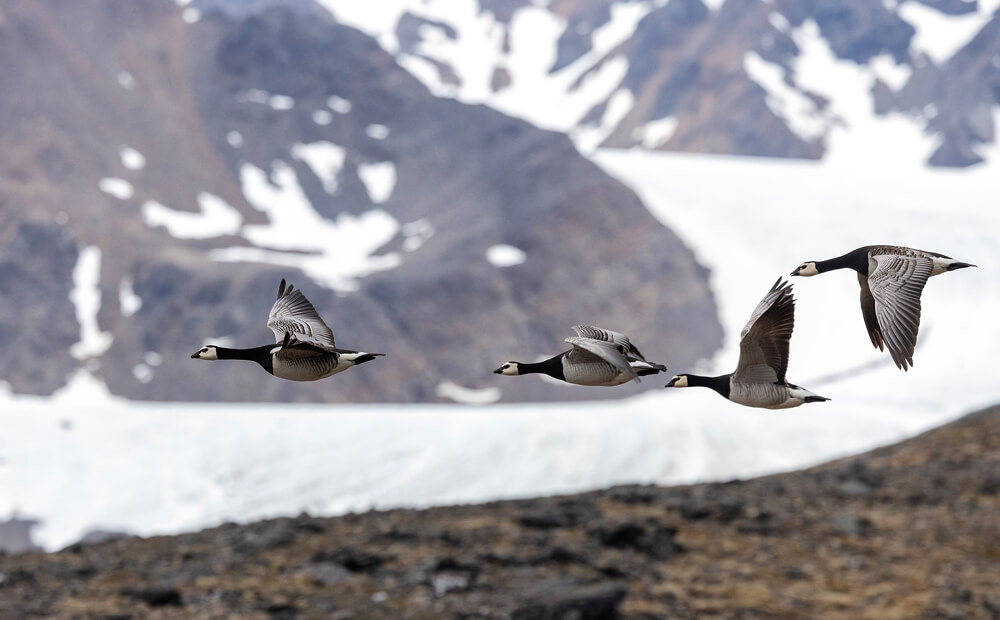
The Arctic, then, is not held together by giants but by the connections between all living things. Every gull, every goose, every fox – all are parts of one system, in which there are no “important” or “secondary” players. There is only interdependence.
What Is Changing in the Arctic?
When we were told that in just five – at most ten – years it would be hard to find ice in the Arctic in summer, we were saddened. But it took us a while to grasp the full depth of the tragedy.
Walruses have become less vocal – and that is a bad sign. Vocal activity is an important indicator of a colony’s wellbeing, and its absence points to stress, illness, or a shortage of resources.
New, more southern bird species have appeared here – ones that previously never ventured this far north. On one hand, this is an expansion of their range. On the other, it means the displacement of native species that have nowhere else to go.
But the hardest hit are polar bears and seals.
One of the Arctic’s most vulnerable species is the ringed seal (Pusa hispida). This is the species that polar bears rely on most for food – the success of their hunts depends largely on it. But the future of these seals is becoming increasingly bleak.
The main threat is the disappearance of spring ice. Ringed seals don’t just live among the ice – they give birth to and nurse their pups in special “ice lairs” that they dig into snowdrifts on top of sea ice. These shelters protect the young from wind, cold, and predators.
To build a lair, a very specific structure is needed: thick and stable ice covered with a sufficient layer of snow. If the ice disappears too early in spring – which is happening more and more often – the lairs collapse, leaving the pups exposed on bare ice or in open water, where they are easily killed by predators or die from hypothermia.
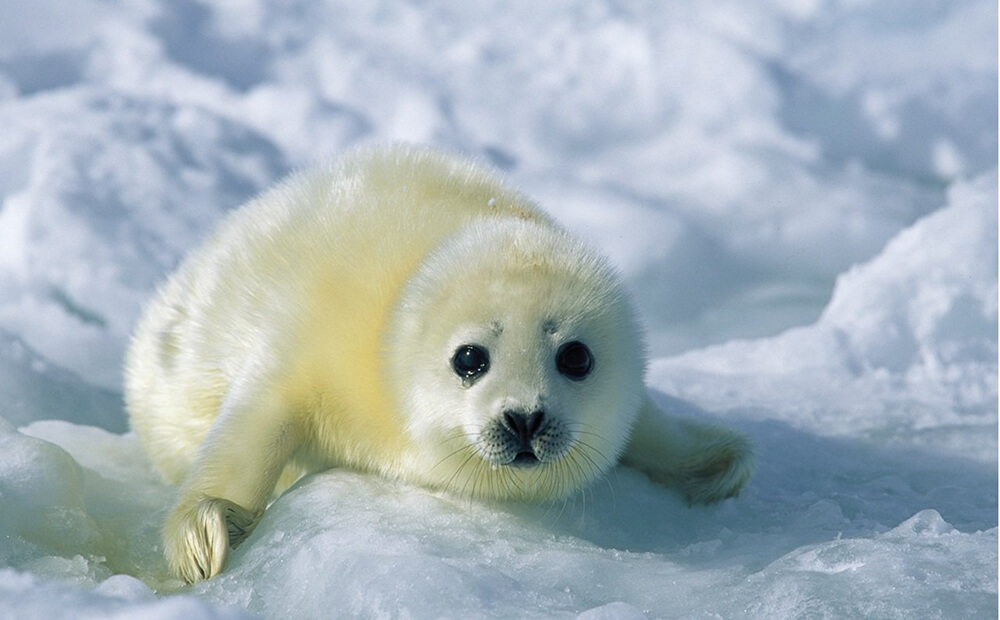
Photo: ornella.club
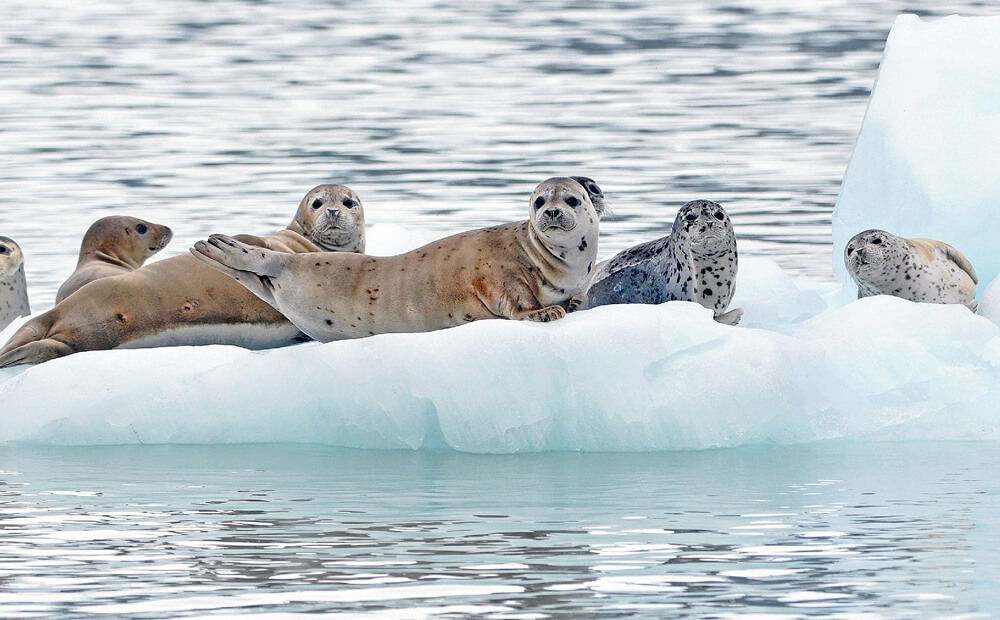
Photo: ornella.club
The problem lies in timing. In the past, a mother seal had around 6–8 weeks to nurse her pup and prepare it for independent life. Today, due to warming, this has been reduced to 3–4 weeks. The pups do not have time to gain the necessary weight and die even if they never encounter a predator.
This is what ecological extinction looks like: not sudden, but gradual – and all the more frightening for it. Scientific data confirms that in some areas of Spitsbergen, seal survival rates in recent years have dropped by 50%. And these animals are not some exotic rarity – they are the foundation of the food chain for bears, foxes, and even gulls.
What We Lose When the Ice Disappears
The Arctic is not simply “ice and cold.” It is a web of interconnected life forms, where a change in one element resonates throughout the system. The disappearance of ice is not only a change in the landscape – it is a rupture in the ecosystem.
1. When the ice vanishes, seals lose their lairs. Without stable spring ice, they cannot raise their pups.
2. Fewer seals mean less food for bears. They are forced to seek alternatives on land – eggs, birds, rubbish. They lose body mass, reproduce less often, and die more frequently.
3. Fewer seal pups mean less food for foxes and gulls. The diversity of feeding strategies drops sharply. Small predators begin to compete more, breaking out of their usual behavioural patterns.
4. Changing ice changes the sea’s acoustics. Walruses, narwhals, and belugas rely on sound to navigate and communicate. Thinner, melting ice and loose ice crystals create a new soundscape in which their echolocation becomes less accurate.
5. Shifts in temperature alter bird and whale migration routes. Some Arctic species lose their nesting grounds, while others face competition from southern species. The delicate balance between timing, location, and food availability is disrupted.
When the ice goes, the foundation of life in the Arctic goes with it. Birds, mammals, plants, and even microorganisms in this region are all tied to the rhythm of freezing and thawing. And when that rhythm is broken, the entire northern “orchestra” begins to play out of tune. I very much hope it will not fall silent forever.
For those who have never been to the Arctic but are planning to go, I will say this – there isn’t much time left. Try to make the journey soon, to witness the stark beauty of glaciers and the life of Arctic animals in their natural habitat.
Natalia Kardash
Articles from this series:
At the Edge of the World: Little-Known Facts About Arctic Animals and Birds
At the Edge of the World: The Arctic – A Place Where You Are Not Allowed to Die