


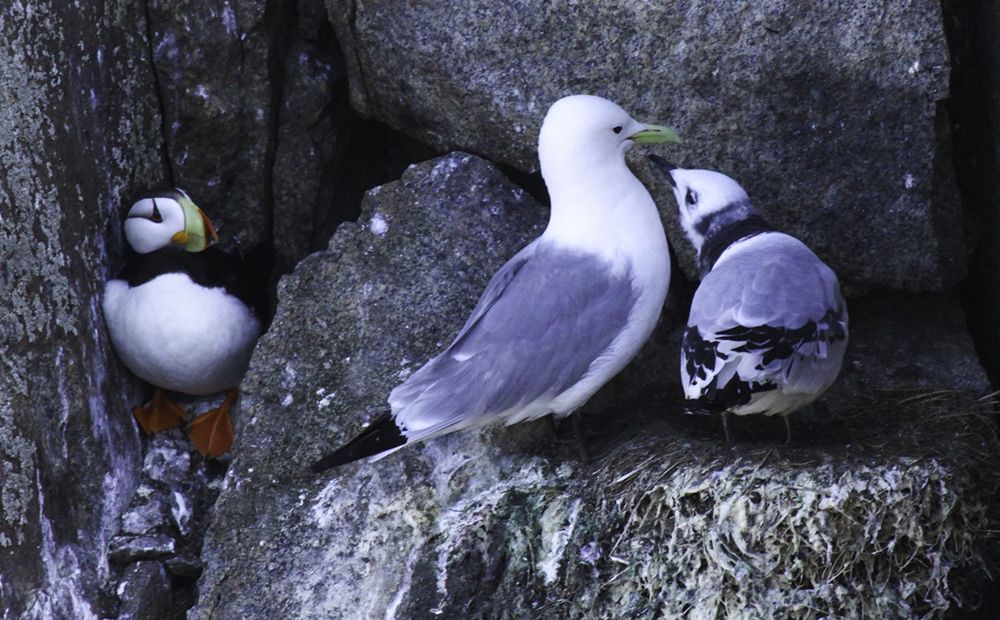
In this article, I will share what I learned about Arctic wildlife from conversations with scientists, naturalists, and guides of the Swan Hellenic expedition. When you stand on the deck, gazing at the coastline, it may sometimes seem that there is no life there. But after spending even just a couple of days in the Arctic, you begin to realise that it has its own rules – very different from those we are used to.
Talking to zoologists, ornithologists, naturalists, and expedition members changed my perception of this place. This article is not an encyclopaedia – rather a collection of little-known facts that surprised me personally.
The Polar Bear – Symbol of the Arctic
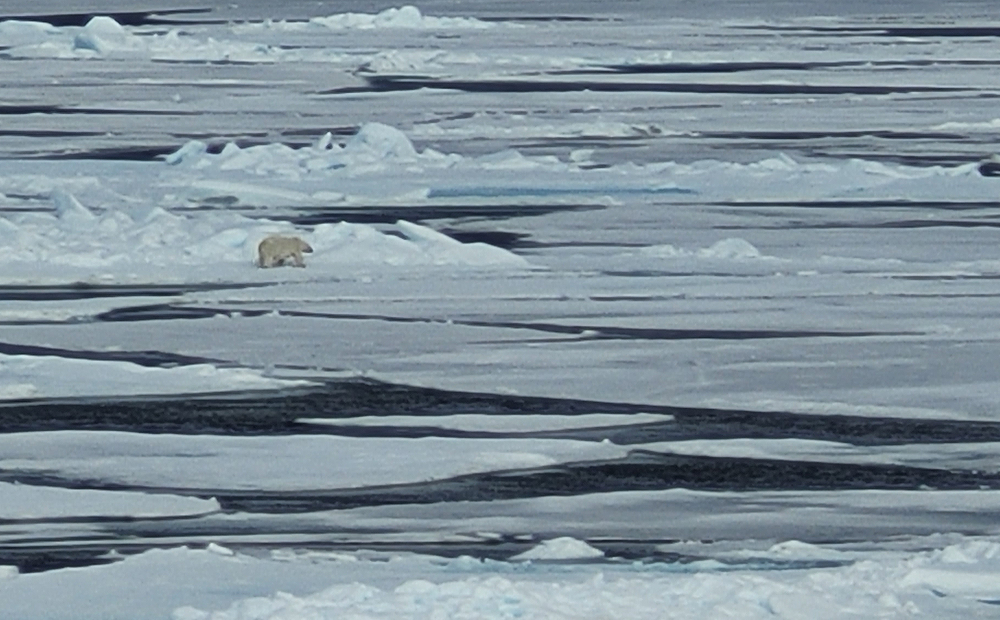
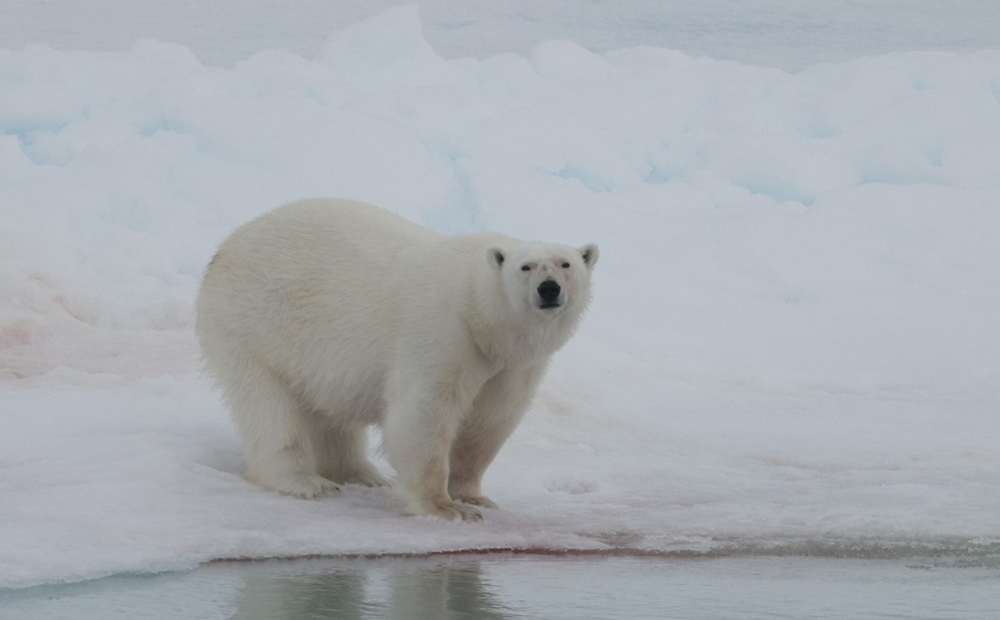
When we think of the Arctic, the first image that comes to mind is the polar bear. Powerful and majestic, it has become the visual emblem of the North and the icon of the polar climate.
Speaking to me during an interview, guide Alena Antonova explained: the polar bear does not adapt to change – it suffers from it. This is an animal for which ice is not just a surface, but the foundation of its ecosystem, its hunting method, its survival strategy, even its migration routes. “It is born, hunts, and dies on the ice. Ice is vital for it,” she said.
Expedition leader Rayann Elzein confirmed: “We are seeing more and more encounters with bears in places where they shouldn’t be. These are the unlucky ones – those that have failed in hunting and have come closer to people. We don’t celebrate such encounters – we worry about them.”
Another often-overlooked fact: the polar bear is silent. It does not make sounds or growl the way films suggest. It can watch for long periods and approach almost noiselessly. This is why strict safety rules apply on board an expedition ship: landings are only permitted with trained and armed bear guards.
The Arctic is not a zoo. And the polar bear is not a model for selfies.
The Arctic Is Noisy – You Just Have to Listen
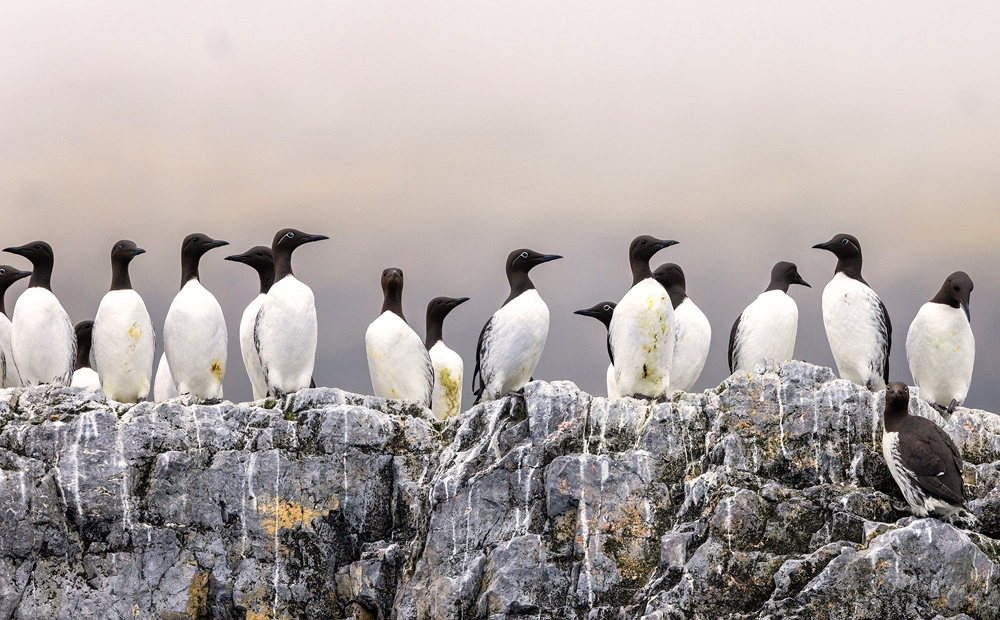
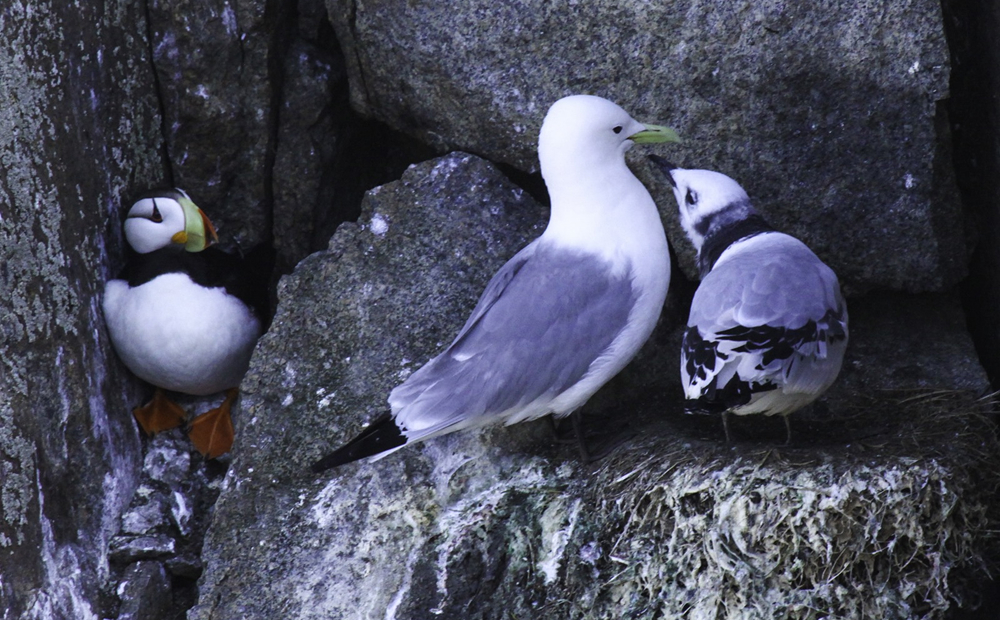
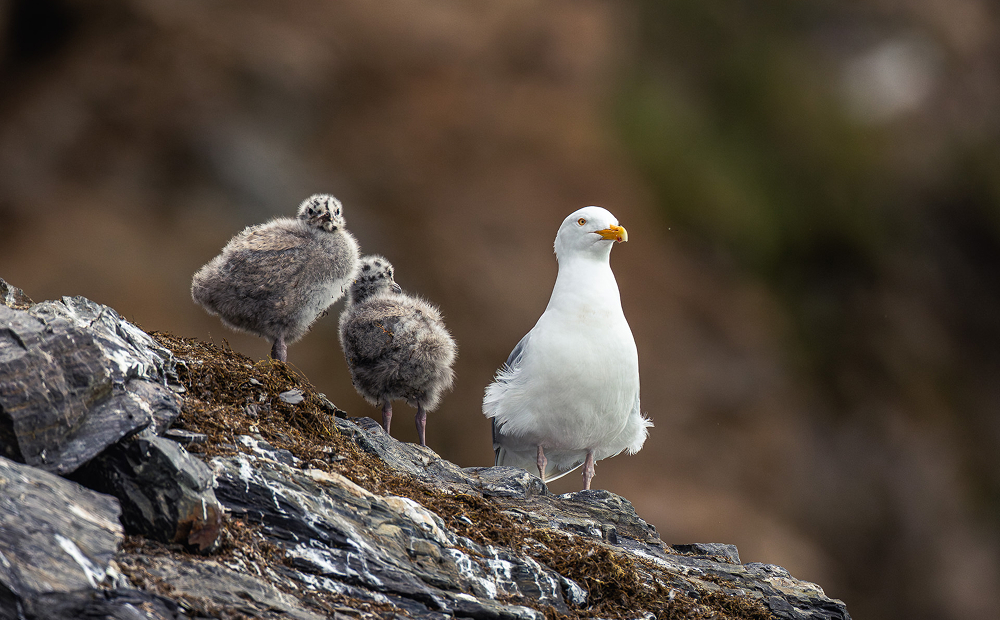
If the polar bear is the symbol of the Arctic, then in summer, the true masters of this region are the birds. As the ice melts, the cliffs become alive. In thousands of calls, the clap of wings, and swift arcs over the sea, an invisible order emerges – strict, noisy, and intricate.
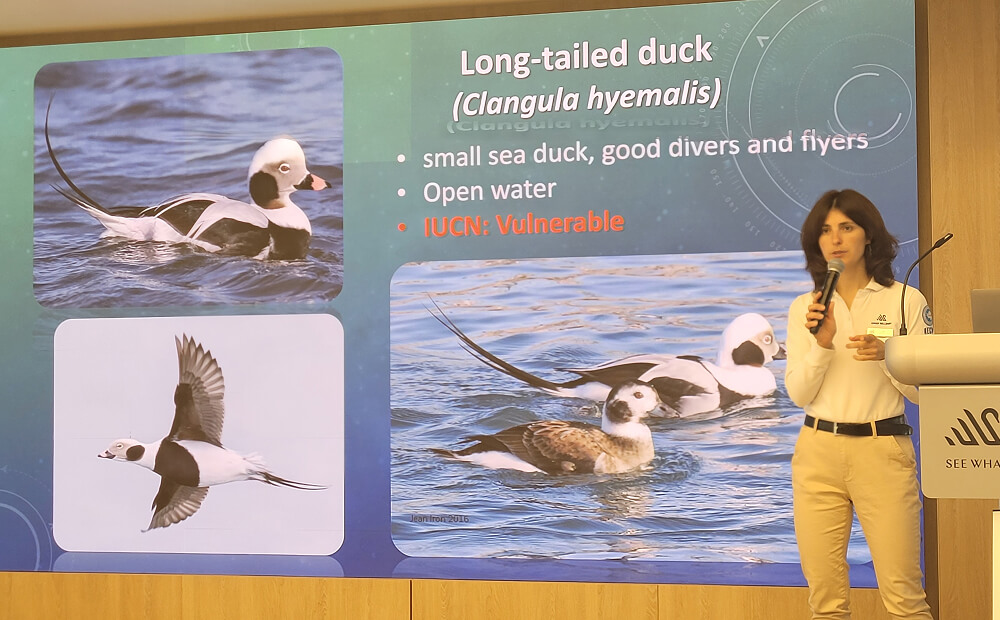
I spoke with zoologist Liya Pokrovskaya, a field researcher with extensive experience. She spoke about birds with both excitement and concern. Many species of Arctic birds are extraordinarily finely tuned “instruments”. Even the slightest change in climate, food supply, or nesting conditions disrupts their populations like a wrong note in a symphony.
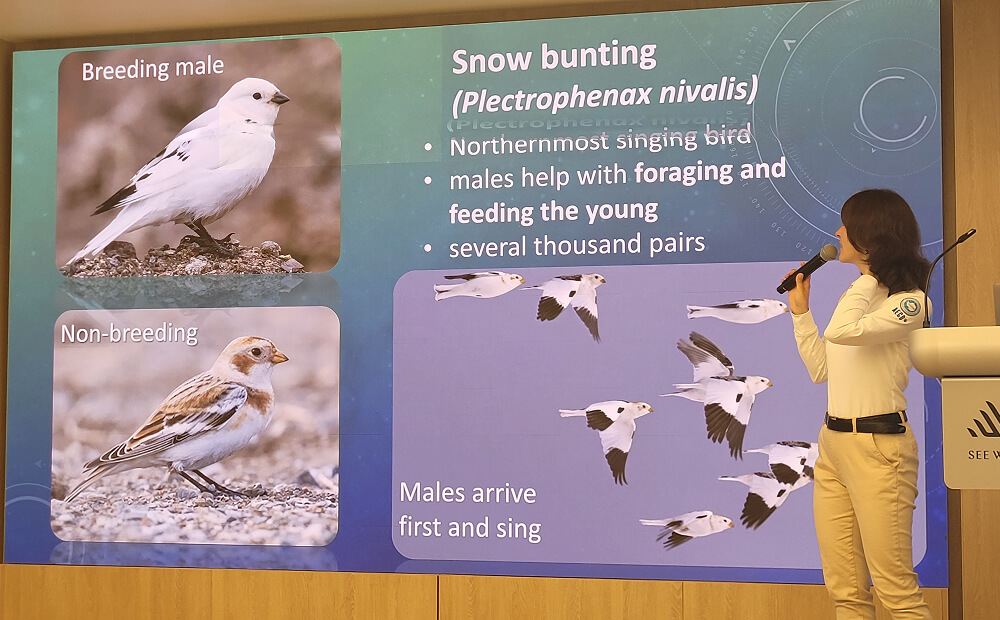
Here is what I learned from her – and what might surprise you:
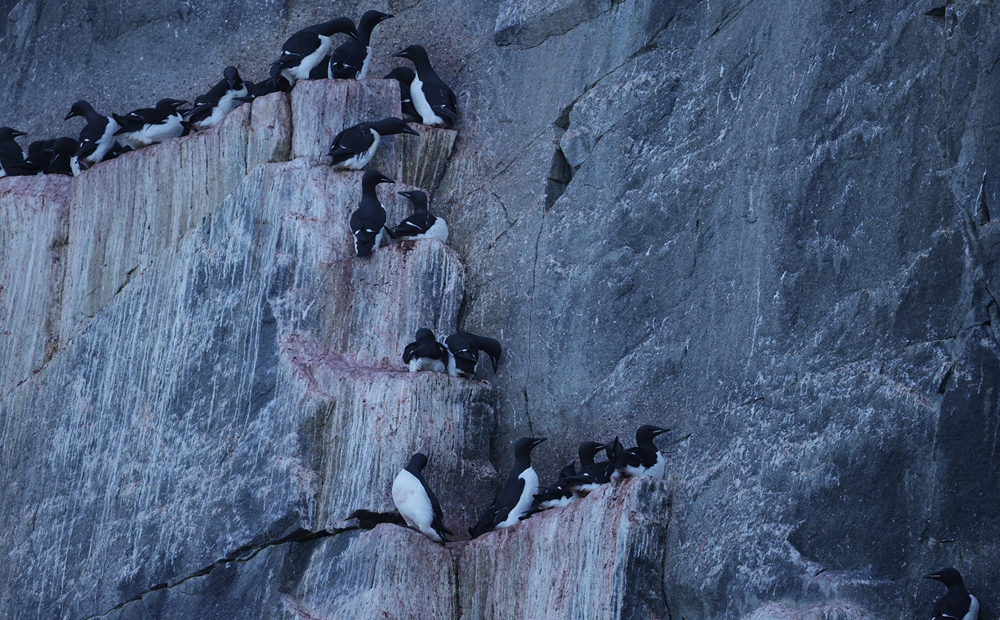
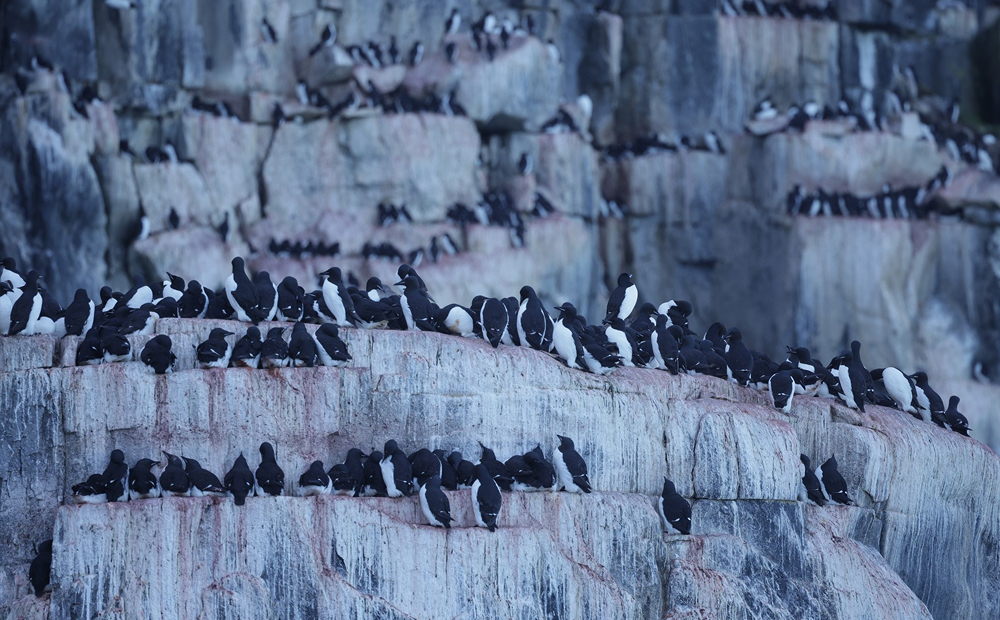
1. Guillemot chicks cannot fly – but they jump from 100-metre cliffs. Brünnich’s guillemots do not build traditional nests. They lay their eggs directly on rocky ledges. When the time comes, the chick simply… jumps down – sometimes from 80 to 120 metres height. This is not a mistake; it is a strategy. Its father is waiting below. He will care for the chick for another two months, teaching it how to survive.
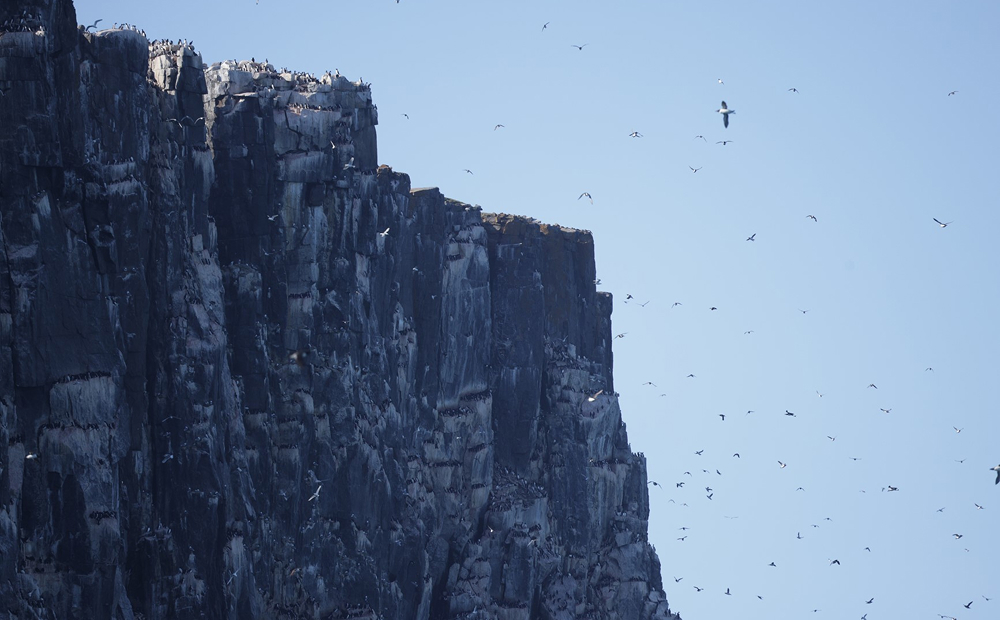
2. The noisiest place in the Arctic is not a city, but a cliff. The Alkefjellet cliff colony has more than 60,000 pairs of birds. They arrive for the short summer to raise their chicks. But this is not chaos – it is an orderly, time-tested system. Every pair has its own place.
3. Little auks fly – and dive – with equal skill. These unique birds move underwater almost like penguins, using their wings to “row”. They can dive up to 100 metres and spend more than 70% of their time at sea – even sleeping on the water.
4. Bird colonies are the main source of life for the entire ecosystem. While feeding their chicks, little auks bring in tonnes of fish from the sea. Fish scraps and guano are a vital nutrient source for Arctic vegetation, enriching the thin tundra soil with minerals that feed mosses and lichens. These attract insects, which in turn draw other birds and small mammals. It is, in a way, a biological pump transferring life from sea to land.
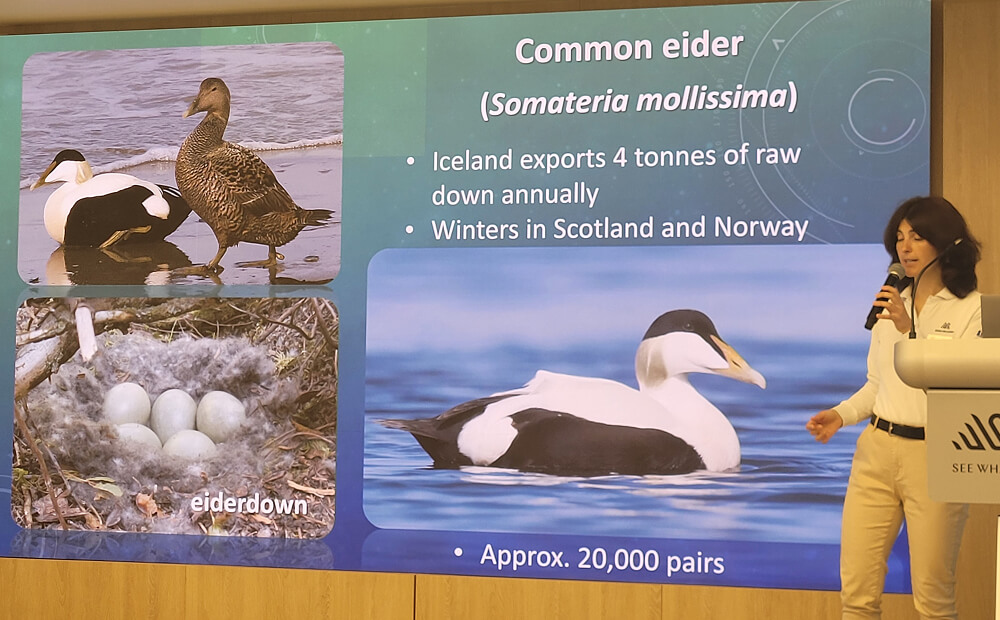
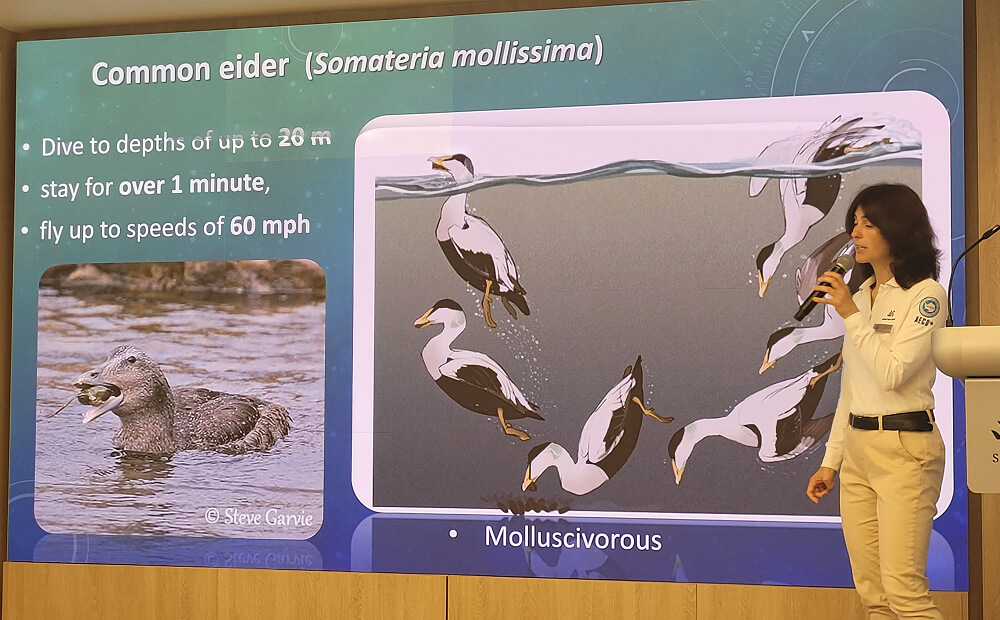
5. Eiders line their nests with their own down. Females pluck down from their own bodies to protect the eggs from the cold. This down is considered one of the warmest natural materials in the world and is used to make luxury duvets. It can only be collected by hand, and only when the birds leave their nests. In Norway, families have passed down this skill for generations, gathering it carefully without harming the birds.
6. Many Arctic birds are monogamous and return to the same nests year after year. Liya showed me photos of ringed birds she has seen on the same cliffs for over a decade. In a world where the ice melts, only the rock remains a constant point of return.
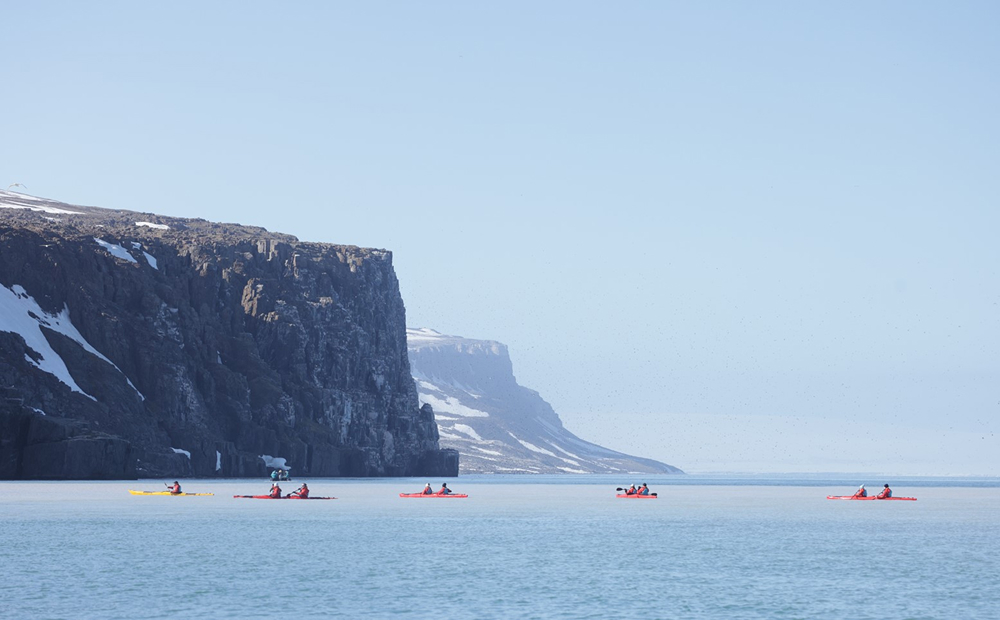
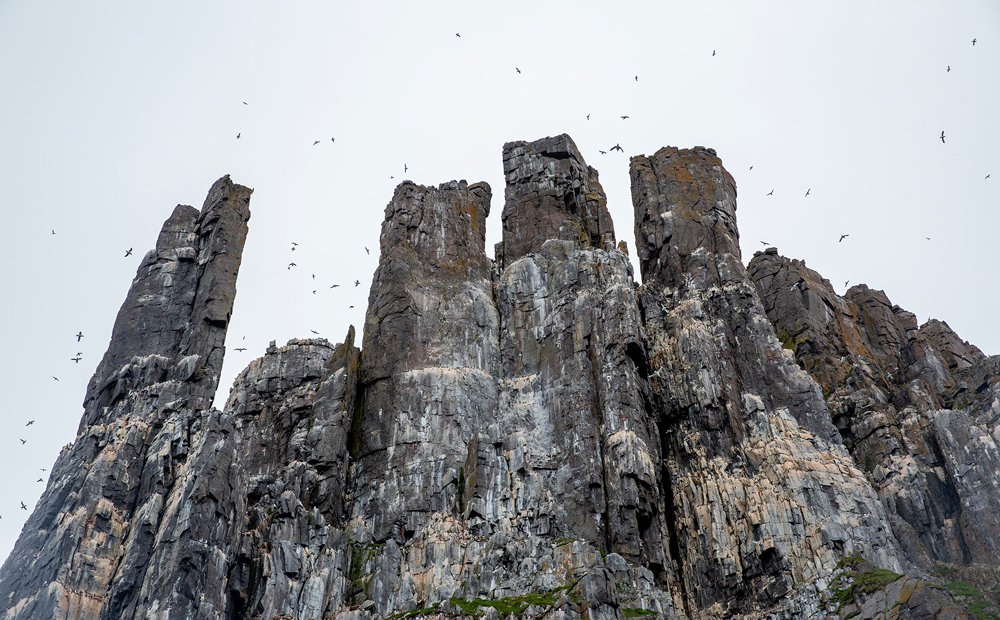
The Alkefjellet cliffs, which I was able to see up close from a kayak at water level, became for me the loudest place in the Arctic. Thousands of birds – calling, flying, and guarding their young – are a reminder that even at the edge of the world, life never stops; it is simply organised differently. I was lucky enough to get very close by kayak: in these parts, the birds are not afraid of people.
The article about Arctic animals and birds turned out to be quite long, and I have many photos. That is why I have divided it into two parts. In the next part, I will tell you about walruses, seals, and whales, as well as foxes and geese. Walruses, like humans, enjoy “chatting” – they have a complex vocal communication system. Arctic seals make breathing holes in the ice – a task that requires precision down to the centimetre. The Arctic fox is not just a hunter but also the “clean-up crew” of bird colonies. About this and other little-known facts – in the continuation.
Natalia Kardash