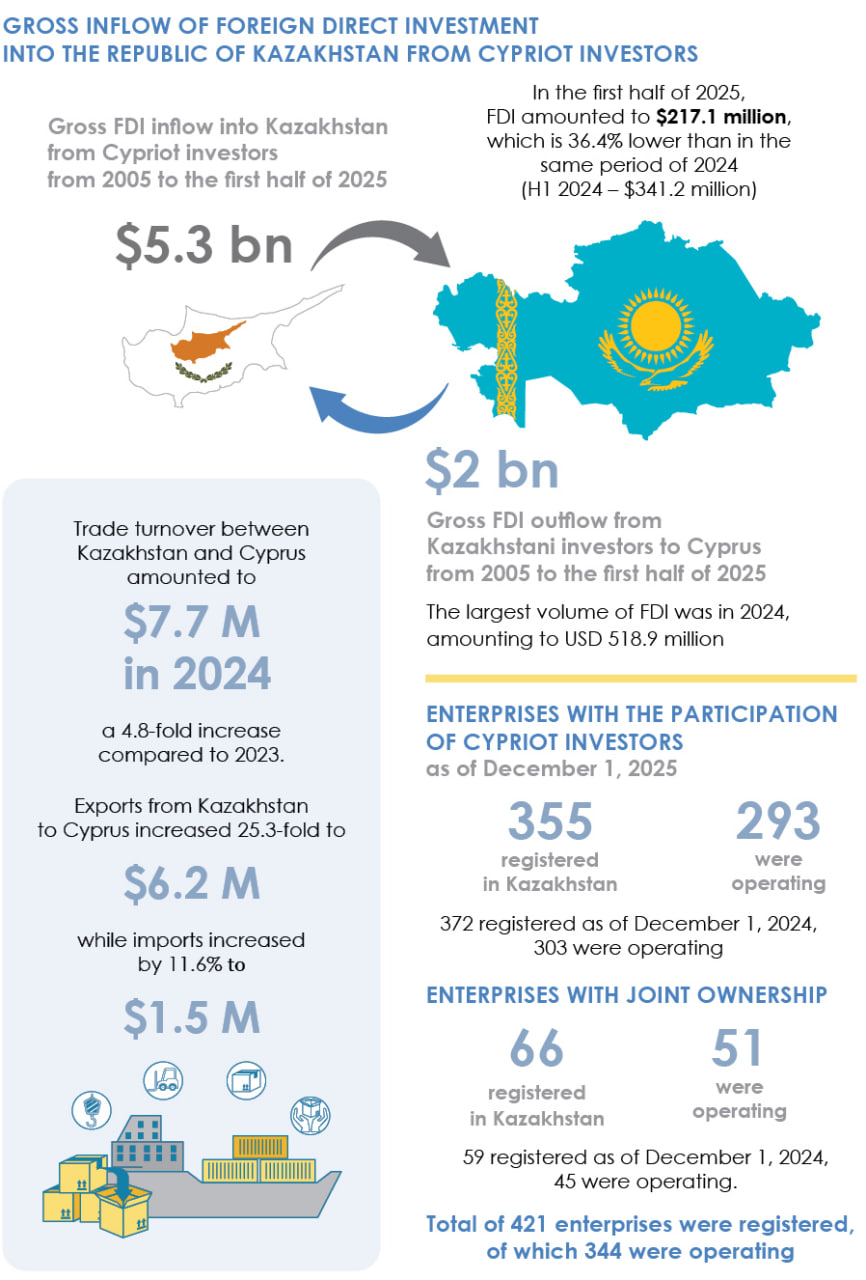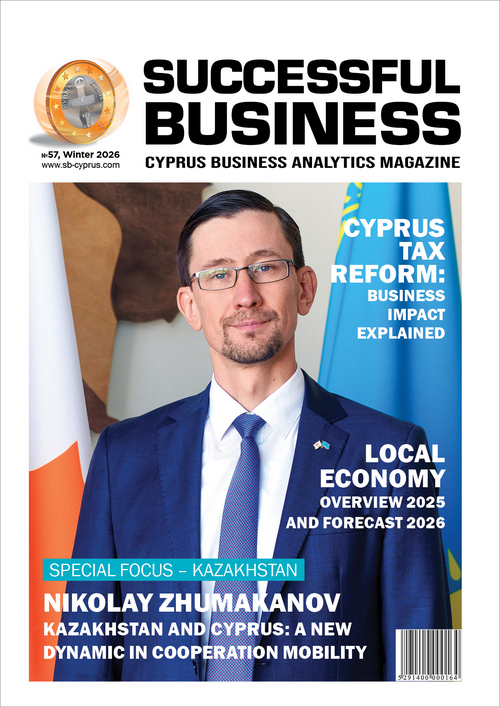


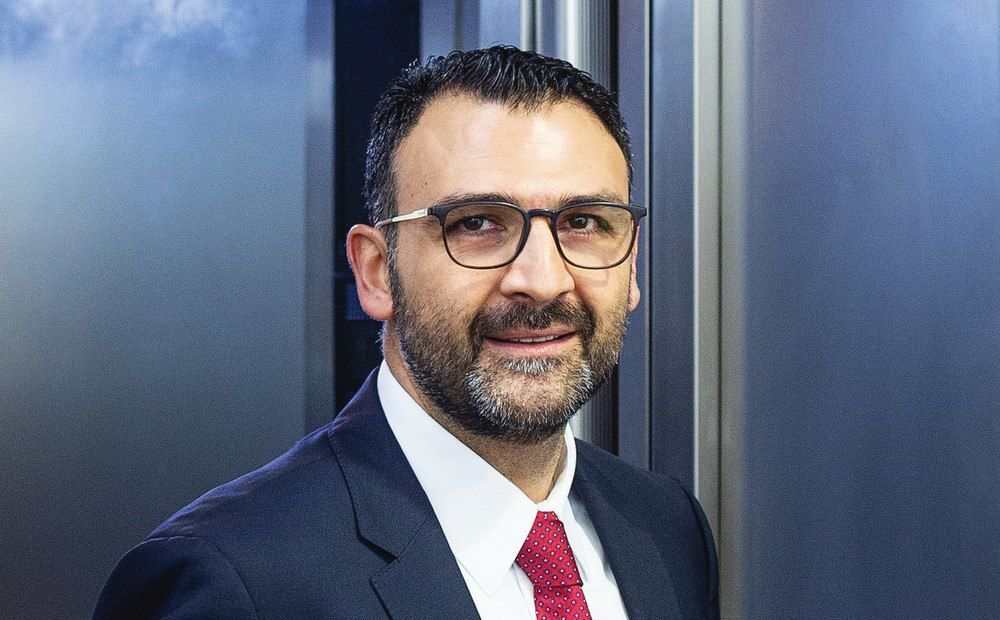
As economic ties between Cyprus and Kazakhstan intensify, Cypriot companies are looking beyond traditional markets and turning their attention to Eurasia’s most dynamic economy. Costas Markides, President of the Cyprus–Kazakhstan Business Association, explains which sectors hold the strongest potential, why newcomers often misjudge the Kazakh market, and how Cyprus can position itself as a strategic Mediterranean partner. In this interview, he outlines practical steps, policy priorities, and the Association’s long-term vision for deepening bilateral cooperation.
Cyprus-Kazakhstan Business Association gathers companies that are actively exploring the Kazakh market. Based on your experience, which sectors show the fastest-growing interest among Cypriot entrepreneurs?
The fastest-growing interest among Cypriot entrepreneurs in Kazakhstan is concentrated first and foremost in energy (including renewables), financial services, logistics, and technology. These sectors benefit from recent trade missions and conferences, rising investment flows, and strong institutional support, positioning them as the pillars of Cyprus–Kazakhstan economic cooperation going forward.
What are the most common mistakes or unrealistic expectations that Cypriot companies have when approaching Kazakhstan for the first time?
Cypriot companies often stumble in Kazakhstan by expecting EU-style simplicity, overlooking cultural and regulatory realities, and chasing quick wins. Success requires patience, local partnerships, and tailored strategies to the Kazakh market environment.
You work directly with both governments and private sectors. What specific reforms or policy improvements would make business cooperation between Cyprus and Kazakhstan even more dynamic?
To make Cyprus–Kazakhstan business cooperation more dynamic, reforms should focus on reducing bureaucratic barriers, strengthening legal and tax frameworks (promote reforms in double taxation agreements, arbitration mechanisms, and trade finance instruments), enhancing transport connectivity, digitalizing trade processes, and expanding sectoral collaboration. These steps would not only sustain the recent surge in trade and investment but also position both countries as strategic partners in Eurasian commerce.
Looking ahead to the next 3–5 years, what is your vision for the Cyprus–Kazakhstan Business Association? Which flagship projects or initiatives do you hope to launch to strengthen bilateral economic ties?
The Cyprus–Kazakhstan Business Association’s vision for the next 3–5 years should focus on logistics integration, renewable energy, tourism, and financial services, anchored by flagship projects like business summits, digital trade platforms, and joint logistics hubs. These initiatives will transform the Association into a dynamic engine of bilateral cooperation, aligning Cyprus and Kazakhstan with broader EU–Central Asia connectivity strategies.