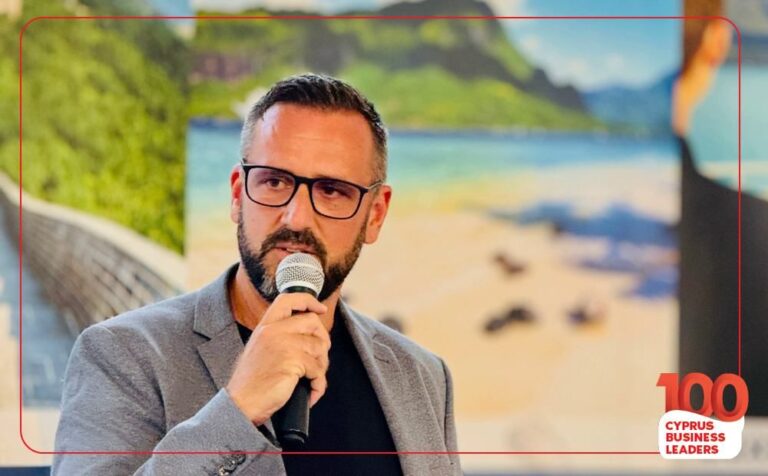
Christian Gihr – co-founder and Chief Visionary Officer of SC Silver Consultancy and President of the Cyprus-Germany Business Association – has built his career by combining entrepreneurial drive with a clear sense of purpose. His leadership philosophy is shaped not only by professional achievements but also by profound personal experiences, which strengthened his belief that innovation and empathy must go hand in hand. Alongside his business and association work, he also channels his passion for sport into new projects such as PadUnite, a platform designed to connect people through padel, competition and community.
Your journey began as an employee, continued as a SAP freelancer, then moved into leadership roles and now you are a Chief Visionary Officer. What inner conviction or discipline has guided you through these different stages of your career?
In the very beginning I worked as an in-house consultant within large companies in Germany. It gave me a strong professional foundation, but it also showed me that simply doing the tasks I was given would never be enough for me. I wanted to create something of my own and to see a clear impact from my work. That drive to build and improve became the red thread throughout my career.
When I became a freelancer, I found more freedom to influence outcomes – optimising processes, helping clients get the best out of their IT systems, making things more efficient for teams. Over time this motivation grew stronger: to be not only part of an organisation but someone shaping it. Every new stage, whether as freelancer, CEO or now CVO, has been about following that conviction – to create, to improve, and to leave a mark that goes beyond the task at hand.
Entrepreneurship and leadership often test character. Which personal qualities have helped you most to navigate uncertainty and which have you consciously worked to strengthen?
I think one of my natural strengths is not being afraid to take decisions. Some may say I move too quickly at times, but for me entrepreneurship requires this courage – to act, to try, to risk being wrong. If you never decide, you remain stuck. Even if a choice later proves imperfect, at least you gain experience.
What I had to consciously develop is the ability to balance this decisiveness with maturity and reflection. Earlier in my career I might jump into too many initiatives at once. Over the years, I learned the importance of focus and the discipline to say no. Another area I have strengthened is confidence in meeting new people and networking. As an introvert, that was not natural for me. But I realised that opportunities often come through human connections, and by pushing myself I discovered the value of opening up and engaging.
Your current title – Chief Visionary Officer – suggests a focus on the future. How do you define “vision” in business, and how do you translate it into daily leadership?
The title was my own choice, because I recognised that my strength and passion lie in thinking ahead and drawing the bigger picture. For me, vision is not just about predicting the next trend or having bold ideas. It is about scanning across different areas – technology, people, society – and understanding how to connect them in a meaningful way.
Vision must also be practical. It is about asking: what can we already use, what can we rethink, how can we help people feel comfortable when change comes at them too fast? And change today is faster than ever – even for someone like me, used to the pace of IT, the speed of AI adoption feels overwhelming. Vision means not only painting the future but giving people the confidence and tools to adapt to it.
At SC Silver Consultancy, you led the company for over five years as CEO. Beyond projects and strategy, what kind of culture and values did you seek to embed in the organisation?
Values are at the heart of SC Silver. When I became CEO, I wanted a culture that genuinely cared – for clients, for quality, for sustainability, but above all for our people. Our top core value is simple: “We care.” It reflects the belief that if people feel respected and supported, they will thrive and give their best.
This conviction is also very personal. Ten years ago, I lost my wife to cancer, leaving me to raise our two boys alone. Balancing family life with running companies was extremely challenging, and it changed my outlook. I realised that family, health and fulfilment are not extras – they are foundations. That is why as a leader I place strong emphasis on integrating family into professional life and ensuring people are happy and balanced.
The team itself developed our six core values through workshops, which makes them authentic. We hold “core value months” to bring them alive in daily practice. For me, culture is not slogans on a wall – it is how people experience work every day.
When you think about your leadership style, do you see yourself more as a strategist, a mentor, or an innovator – and how do you balance those roles?
I would say all three play a role, but in different proportions depending on the situation. As a strategist, I need to set direction and make choices about where we invest time and energy. As an innovator, I am always scanning for new opportunities, new ways of working, new technologies. But I also see myself as a mentor, especially because our team is relatively small.
One habit I keep is a daily reminder to connect with the team – even if it is just a short chat or call. We work remotely, so these moments of presence matter. We also organise regular dinners, game nights and workshops, which help strengthen bonds. For me, leadership is not about being distant but being engaged, showing that you genuinely care about how people are doing – not just in business but in life.
In your view, what distinguishes truly visionary leaders from those who are simply strong managers?
Managers keep everything under control, which is valuable – but visionary leaders are willing to take risks. Not only in launching products or entering markets, but also in trusting their teams, in trying unconventional ways of working, in making decisions that might look illogical in the short term but are right for the long term.
Visionary leadership requires courage to go against the obvious, and also humility to admit when something does not work. I believe visionary leaders care more about building environments where people and ideas can flourish, even if that means losing revenue in the short run. For example, we once left a large and profitable project in France because the client treated our consultant disrespectfully. From a managerial perspective, you might accept the revenue and tell the person to endure. From a visionary perspective, you protect your team and the culture you stand for.

You wear two hats – as a business leader at SC Silver Consultancy and as President of the Cyprus-Germany Business Association. What has leading a business association taught you about leadership that running a company could not?
It has broadened my perspective enormously. In a company, your focus is naturally result-driven – how to deliver for clients, how to grow the business. In an association, the focus is different: you connect, you facilitate, you create opportunities for others.
At CGBA I often meet people who are not connected to my own industry, but by helping them connect with others, doors open in surprising directions. It showed me the power of collaboration without immediate self-interest. Leadership in an association is about serving the community, and through that service unexpected opportunities and friendships emerge. That has been a humbling and rewarding lesson.
Technology and consulting are central to your work, but leadership is about people. How do you build human connection and trust in an industry that can often feel highly technical?
For me it begins with genuine interest. I want to know what is happening in people’s lives – if someone is struggling, if there is a family issue, if something is affecting their energy. We are professionals, but we are also human. A leader who ignores that will never have a truly committed team.
Remote work makes this even more important. Without informal coffee breaks or corridor conversations, you need to intentionally create space for connection. That is why we have regular social activities and team workshops. I want people to feel seen and supported, not just as employees but as whole individuals. Trust is built not through policies but through daily human contact.
You’ve also explored different industries – from IT and consulting to recruitment and marine ventures. What has this diversity taught you about resilience, curiosity, and risk-taking?
The diversity came partly by coincidence, partly by curiosity. Recruitment, for example, grew out of my experience as a consultant working with freelancers. Marine was through a partnership with a friend who was an engineer. Both ventures were interesting, but not all of them worked out long term.
What I learned is that trying different things is never wasted. Even when a project does not succeed, you gain knowledge, resilience and clarity about where your strengths truly lie. I also learned the value of focus – you cannot do everything, and sometimes you must step back from opportunities, however attractive they seem. Risk-taking is essential, but so is the courage to stop when it no longer fits.
Cross-border cooperation is at the heart of your role with CGBA. On a personal level, what excites you about bringing different cultures and business mindsets together?
I have always loved traveling and experiencing different cultures. Every culture has strengths and lessons to offer – whether it is the family values and community spirit I admire in Cyprus, or the precision and structure I know from Germany. When you bring people together across cultures, they can learn from each other in ways that enrich both business and life.
Personally, moving to Cyprus with my two sons eight years ago was transformative. It opened me to new ways of living and working. Through CGBA I now have the chance to extend that experience – helping others bridge cultural differences, fostering collaboration, and creating opportunities that neither side could achieve alone.
Every leader encounters setbacks. Can you share a moment that challenged you deeply but ultimately made you a stronger and more empathetic leader?
One of the toughest moments was when the partnership in MLV Marine broke down. We had invested time, energy and friendship, but our values and working styles diverged. Ending the collaboration was painful, both professionally and personally. Yet it forced me to focus more clearly on what mattered to me – the values, the culture, the type of business I wanted to build.
Another difficult but defining experience was the loss of my wife. Raising two boys alone while running companies was not something I ever imagined. It gave me resilience, but more importantly, it gave me empathy. I know how important it is to create environments where people can balance work and family, and where they feel supported in difficult times. Setbacks, however hard, shape you into a more human leader if you allow them to.
If we look ten years ahead, what would you like your leadership to be remembered for – not only in results but in how people experienced working with you?
I hope people will remember me as someone who cared about their growth. For me the most fulfilling thing is to see people evolve – to start in one role and discover new strengths, new passions, new paths. One of our team members joined as an admin assistant and is now developing skills in marketing and digital tools. Watching her progress has been inspiring.
If my legacy is that people felt supported to develop, to find their passion, and to enjoy what they do – whether inside my company or beyond – then I will be happy. Results matter, but people matter more. In the end, leadership is about helping others grow, just as much as it is about achieving your own vision.
That is also why I enjoy creating new projects that bring people together in meaningful ways. One example is PadUnite, a platform we are building around the sport of padel, which I personally love. It will connect players, organise tournaments and leagues, and even create opportunities for business networking through the App. We are launching it with a CGBA padel tournament in Protaras this October. For me, ventures like this embody what leadership should leave behind – spaces where people can thrive, connect and find joy together.
Interview by Kateryna Bila
#SB100Leaders